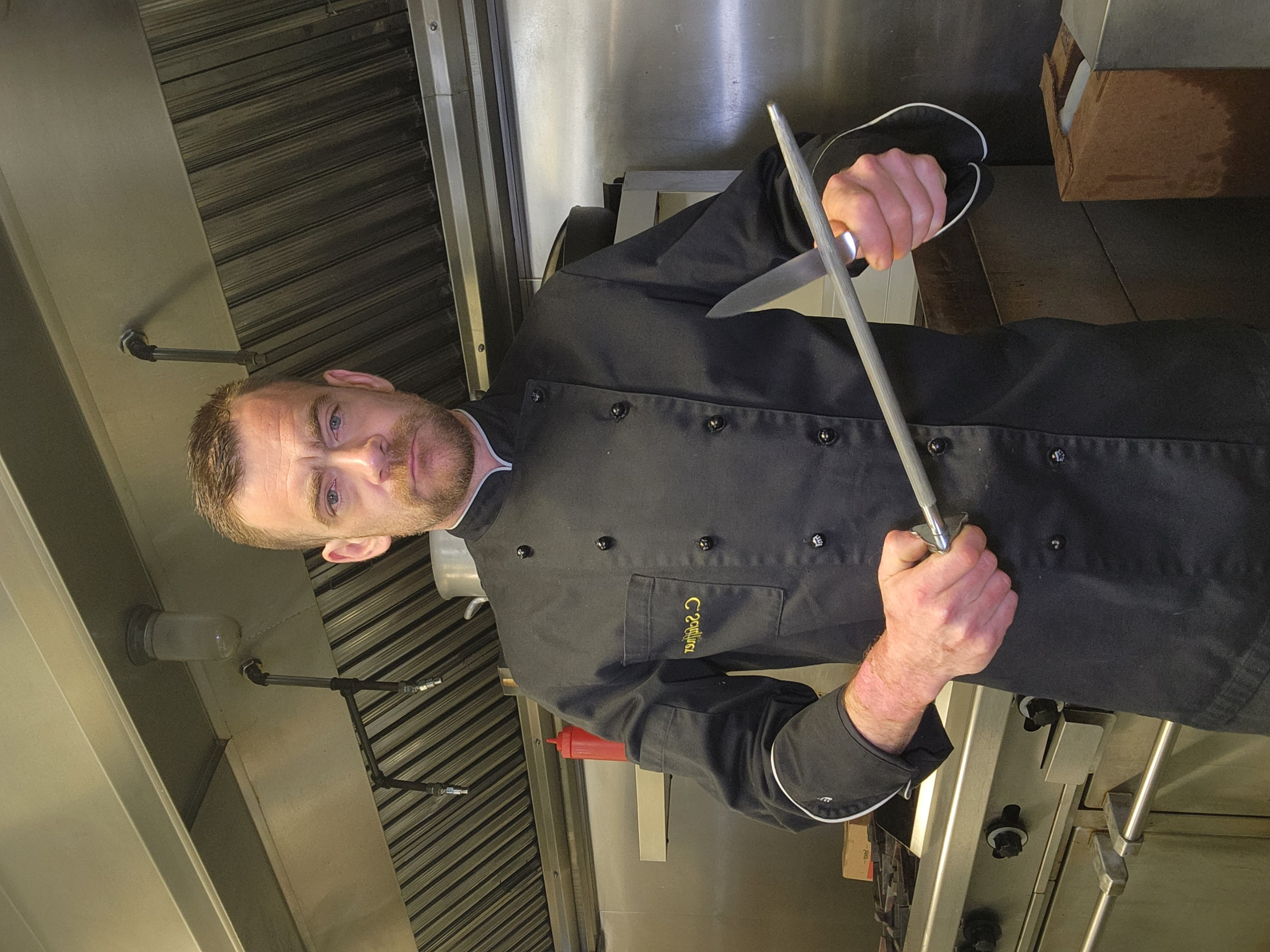
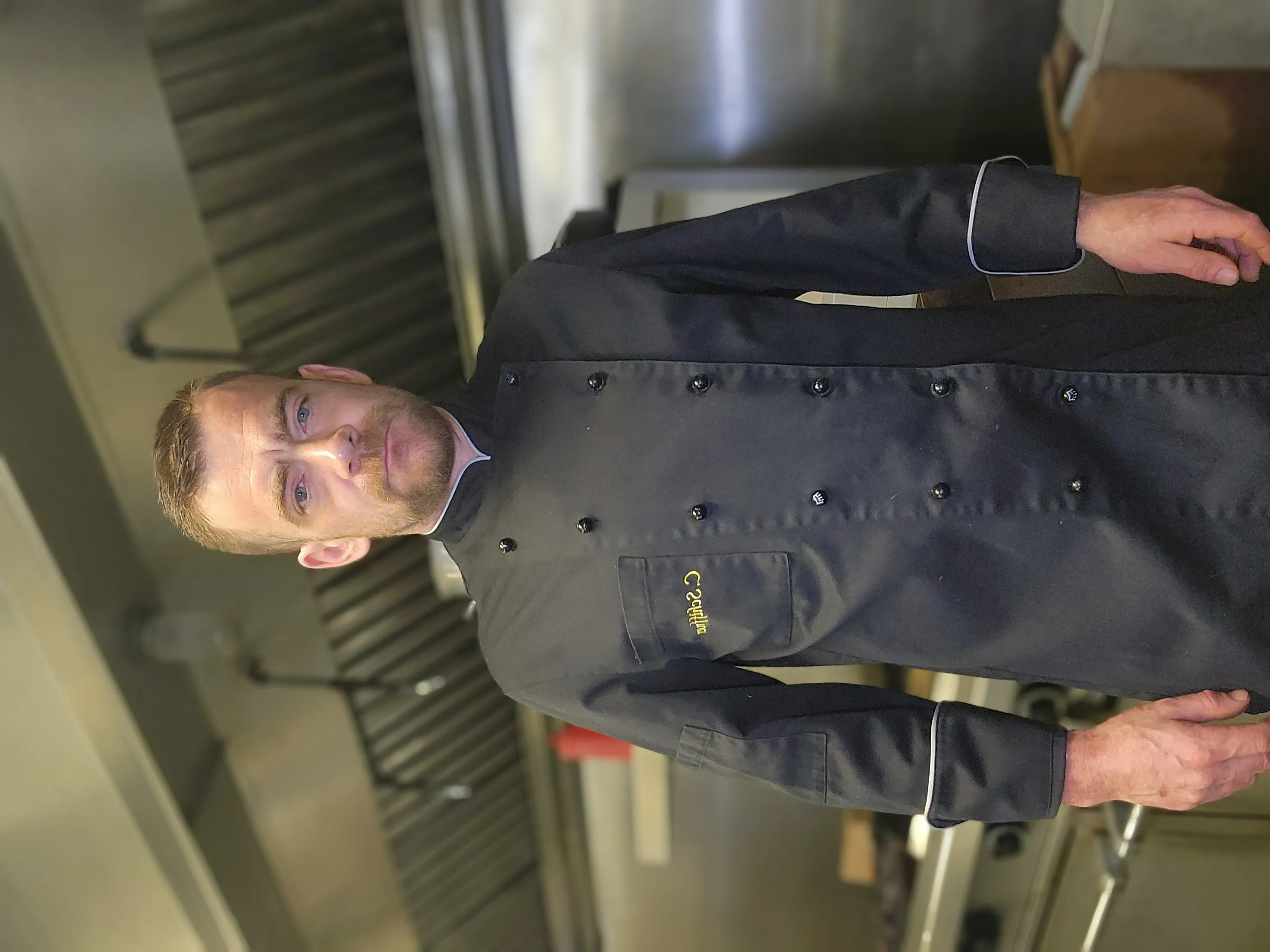
The 72-Hour Profit Discovery is a signature diagnostic process designed to find hidden profit leaks in independent restaurants within 3 days. By detail-auditing 9 specific categories of waste, operators typically find between $15,000 and $50,000 in annual recovery. It follows a three-phase protocol: Day 1: Exposure (Pulling the Numbers), Day 2: Diagnosis (Finding the #1 Leak), and Day 3: Install (Building the Fix).
You’re working 80 hours a week. Your dining room is full. You’re exhausted. But when you look at the bank account, it doesn’t match the effort. You know you’re making money, but you can’t see where it’s going.
Most operators think they have a revenue problem. They think they need more customers. They don’t. They have a visibility problem. They are bleeding money from the revenue they already have.
I know this because I lived it. I was a German-trained Kuchenmeister running a restaurant in the Yukon, working 100-hour weeks, and carrying $370,000 CAD in debt. I was "white-knuckling" it — surviving on sheer willpower while my profit leaked out of a hundred small holes I was too tired to see.
The 72-Hour Profit Discovery is the framework I built to find those holes. It isn't a consulting project. It isn't a 90-day plan. It’s an emergency diagnostic. 72 hours. Find the bleed. Stop it. Move on.
Want to find your biggest profit leak in 90 seconds?
The 9 Categories of Restaurant Profit Leaks
Profit leaks are invisible because they don’t show up on your P&L as a line item. Your P&L tells you what you spent. It doesn't tell you what you *should* have spent. The gap between those two numbers is the leak.
In 20 years across 5 countries, I’ve found that leaks always hide in these 9 categories:
- Food Cost Drift: The gap between your theoretical food cost (based on recipes) and your actual food cost. If you think it's 30% but it's 34%, that 4% drift is a leak.
- Labor Scheduling Waste: Paying for staff when there are no customers. Most operators schedule by "feel" instead of revenue-per-labor-hour targets.
- Menu Pricing Gaps: Selling items that cost more in labor and ingredients than they return in margin. Your bestsellers might be your biggest losers.
- Portion Control Variance: "Eye-balling" the protein. A 1/2 oz over-portion on a $30 steak, repeated 200 times a week, is a $5,000 annual leak.
- Ordering & Inventory Waste: Money sitting on the shelf in the form of dead stock or bulk orders that expire before they’re used. Cash flow is king; inventory is frozen cash.
- Vendor Pricing Gaps: Not auditing invoices against contract prices. Suppliers raise prices. If you aren't checking every week, you're paying a "loyalty tax."
- Delivery Commission Bleed: Thinking delivery platforms are "extra revenue" while they eat 30% of your top line and 100% of your margin.
- Energy & Utility Waste: Equipment running on full power during closed hours. It sounds small until you realize your walk-in motor is struggling because of a $10 gasket.
- Theft & Shrinkage: Untracked staff meals, "free" drinks at the bar, and actual theft. If it isn't rung into the POS, it's a leak.
The $41,000 Discovery
The first time I ran this full process, I found $41,000 in annual waste. Half of it was in just two categories: vendor price drift and portion variance. I was a Master Chef, and I was still losing the price of a mid-sized SUV every year because I wasn't looking.
Day 1: Exposure (Pulling the Numbers)
Day 1 is about honest inventory. In recovery, the first step is admitting you have a problem. In a restaurant, the first step is pulling the numbers you’ve been avoiding.
You need to collect four weeks of three things: POS item-sales reports, every single invoice from every supplier, and your actual labor hours versus your scheduled hours. Don't analyze yet. Just get it all in one place. You are making the invisible visible.
Most operators stop here because it's uncomfortable. Looking at a stack of invoices and realizing your salmon price jumped 18% while you weren't looking hurts. But that pain is information. It’s the energy you need to fix the business.
Day 2: Diagnosis (Finding the #1 Leak)
On Day 2, we rank the leaks by dollars, not percentages. The industry obsesses over food cost percentage. I don't care. I care about how many dollars are leaving the building.
A 2% leak on your $20,000 food budget is $400/month. A 10% leak on your $2,000 bar budget is $200. Focus on the $400. You rank your 9 categories by dollar impact and pick the top one. Not the top three. The top one.
We use the "5 Whys" to find the root cause. If your food waste is high, why? Because we over-prep on Thursdays. Why? Because we don't have a prep sheet for the weekend. Why? Because we don't track reservation counts. **There's your leak: no reservation-based prep system.**
Day 3: Install (Building the One-Page Fix)
Systems work when you’re tired. Motivation fails. Willpower fails. Especially in a Friday night rush.
Day 3 is about building a one-page protocol to stop the #1 leak. One page. Five steps. No jargon. It must pass the "60% Capacity Test" — would an exhausted operator actually use this at 11:00 PM? If it’s too complex, it isn’t a system; it’s a burden.
You install the measure today. You don't wait for Monday. You don't wait for next month. You install the tracking today so you have data by tomorrow morning.
"Systems work when motivation fails. Stop white-knuckling it and start measuring. The math doesn't care about your effort — it only cares about your systems."
Why Systems Beat Hustle
When I was $370K in debt, I tried to work my way out of it. I worked 140 days straight. I got sicker, my staff got more stressed, and the debt barely moved. It was only when I treated the business like my recovery — one day at a time, based on honest inventory and rigid systems — that the math changed.
The 72-Hour Profit Discovery isn't about working more. It's about operating with "operational sobriety." It's about running your kitchen by the numbers, not by your gut. Once you've found the leaks, the 21-Day Protocol gives you the structure to close them permanently.
Frequently Asked Questions
What is a restaurant profit leak?
A profit leak is money leaving your restaurant that doesn't show up on a standard P&L statement as a line item. It's the gap between what you should be making and what you are actually making.
How much money can a 72-hour discovery find?
Most independent restaurants find between $15,000 and $50,000 in annual waste. Larger operations or those with multiple units often find six-figure recoveries by standardizing their discovery process.
Do I need a consultant to find profit leaks?
No. You need your numbers and a system to look at them. This framework is designed for owner-operators to run themselves. A consultant can help, but the first discovery should always be yours.