Track five numbers daily: total revenue vs. forecast, food cost as a percentage of that day's sales, labor cost as a percentage of that day's sales, waste log (what got thrown away and why), and cash variance (actual cash vs. POS reports). Monthly P&L statements show you averages. Averages hide leaks. Daily tracking catches a $200/day waste problem on day 1 — not 30 days and $6,000 later.
Most restaurant owners I talk to check their numbers once a month. They sit down with their accountant or their bookkeeper, look at the P&L, and react to whatever happened 30 days ago. That's like driving a car by only looking in the rearview mirror. You're going to crash. You just don't know into what yet.
Daily tracking isn't about being a control freak. It's about catching problems while they're small. A $200/day waste problem is annoying on day one. It's a $6,000 disaster on day thirty. Same problem. Different price tag. The only difference is when you saw it.
Why Monthly Tracking Fails
Your monthly P&L statement is a lie. Not deliberately — structurally. It averages everything together and hides the days that are killing you.
Here's an example. Your monthly food cost comes back at 31%. That's fine. Industry standard. You move on. But inside that 31% average:
- Monday through Wednesday: food cost was 26% (slow days, controlled prep)
- Thursday: food cost was 29% (reasonable)
- Friday and Saturday: food cost was 33% (busy, some waste, some over-portioning)
- Sunday: food cost was 42% (over-prepped for a rush that didn't come, threw away $380 in product)
Your monthly average is 31%. Your actual problem is Sunday. But the average buried it. You'd never know unless you tracked daily.
Now multiply that by labor. Your monthly labor cost is 29%. But Tuesday lunch had two servers for 12 covers. That's a $180 labor overspend on a $600 revenue shift. That happened every Tuesday for four weeks. $720/month gone. The monthly P&L just says "29% labor." It doesn't tell you Tuesday lunch is the problem.
The $200/Day Rule
A $200/day problem sounds small. That's one over-prepped protein, two extra staff hours, or a few missed waste entries. But $200/day is $6,000/month. $6,000/month is $72,000/year. That's the difference between a restaurant that survives and one that closes. Daily tracking catches $200 problems. Monthly tracking catches $6,000 problems. Same leak. Different price.
The 5 Daily Numbers That Matter
1. Total Revenue vs. Forecast
Pull your POS total from yesterday. Compare it to what you expected. Not last year's numbers — your forecast based on reservations, day of week, weather, and local events.
If you're consistently 15-20% below forecast, your forecasting is broken. Fix the forecast first. If you're hitting forecast but still not profitable, the problem isn't revenue — it's cost. This one number tells you which conversation to have.
Time to check: 2 minutes.
2. Food Cost % (That Day's Sales)
Take yesterday's food purchases and usage, divide by yesterday's revenue. This won't be perfectly accurate daily — some days you receive product you won't use until tomorrow. That's fine. You're looking for patterns, not perfection.
If Tuesday's food cost is 38% and Wednesday's is 24%, you're over-prepping for Tuesday. If every day is 33-35%, you have a consistent portioning or pricing problem. The daily number shows the shape of the problem. The monthly number hides it.
Time to check: 3 minutes.
3. Labor Cost % (That Day's Sales)
Total labor cost for the day (including your cost — don't forget to pay yourself) divided by that day's revenue. This is where most operators bleed without knowing it.
A $4,000 Friday with $1,200 in labor is 30%. Fine. A $1,500 Tuesday with $900 in labor is 60%. Not fine. You made $600 in gross revenue and spent $900 on people. You lost money on labor alone before food cost, rent, or anything else.
Most operators don't cut Tuesday's labor because they staffed it the same as they always have. Daily tracking makes the waste visible. Visible waste gets fixed.
Time to check: 3 minutes.
4. Waste Log
What got thrown away yesterday? How much? Why?
This is the number everyone skips. It feels tedious. It feels like micromanaging. It's neither. It's the single fastest way to find money you're throwing in the garbage.
The waste log doesn't need to be fancy. A clipboard in the kitchen. Date, item, amount, reason. That's it. After two weeks, you'll see patterns: the same protein over-prepped every Monday, the same sauce made in a batch too large for Wednesday's volume, the same prep cook cutting vegetables in portions meant for Saturday dinner service on a Tuesday.
I found $41,000 in annual waste in my first year of tracking. Not because I was careless. Because I'd never looked. Nobody had. The waste was invisible until I made it visible.
Time to check: 2 minutes.
5. Cash Variance
Count the drawer. Compare it to what the POS says should be there. Every day. No exceptions.
A $5 variance once? Miscounted change. A $20-$50 variance three days in a row? That's a pattern. And patterns mean either theft, comping without tracking, incorrect void procedures, or a POS error you need to find.
Cash variance isn't about trust. It's about systems. Good systems don't require trust. They require counting.
Time to check: 5 minutes.
Total daily tracking time: 15 minutes. That's it. Fifteen minutes between when you finish closing and when you leave. If you can't find 15 minutes, that's a different problem — and we should talk about that too.
Weekly Roll-Up: The Prime Cost Check
Every Sunday, take your daily numbers and add them up for the week. The number you care about most is prime cost: food cost + labor cost as a percentage of total revenue.
- Under 55%: You're running a tight ship. Focus on growth.
- 55-60%: Healthy range for most independents. Monitor for drift.
- 60-65%: Warning zone. Find the leak. It's in your daily numbers.
- Over 65%: Emergency. You're losing money even on busy nights. Something is structurally wrong — menu pricing, staffing model, waste, or all three.
The weekly roll-up takes 10 minutes because you already have the daily numbers. Without daily tracking, this would take hours of digging through POS reports and invoices. With daily tracking, it's just addition.
Prime cost is the single most important number in your restaurant. It tells you whether the core business works before rent, insurance, utilities, and everything else. If prime cost is right, you can fix everything else. If prime cost is wrong, nothing else matters. Once your tracking is consistent, the 21-Day Protocol gives you the systematic recovery structure to close the gaps permanently.
Tools You Need (And Don't Need)
You don't need a $300/month inventory platform to track daily. I know the software companies want you to think you do. You don't.
What you actually need:
- A spreadsheet. Google Sheets is free. One tab per week. Five columns: revenue, food cost %, labor cost %, waste log summary, cash variance. Done.
- A clipboard in the kitchen. For the waste log. Physical paper. A pen. Staff write down what they throw away. Takes 10 seconds per entry.
- Your POS end-of-day report. You're already printing this. Just read it.
- A calculator. The one on your phone works.
What you don't need:
- Inventory management software (not yet — get the habit first)
- A dedicated tablet for tracking (your phone or a laptop works)
- A bookkeeper checking daily (that's your job — 15 minutes)
- Anything that costs money before the habit is locked in
I've seen operators buy $500/month platforms and never open them after the first week. The tool didn't fail. The habit did. Start free. Start simple. Build the habit for 90 days. Then decide if you need better tools.
The Daily Tracking Habit That Saved My Restaurant
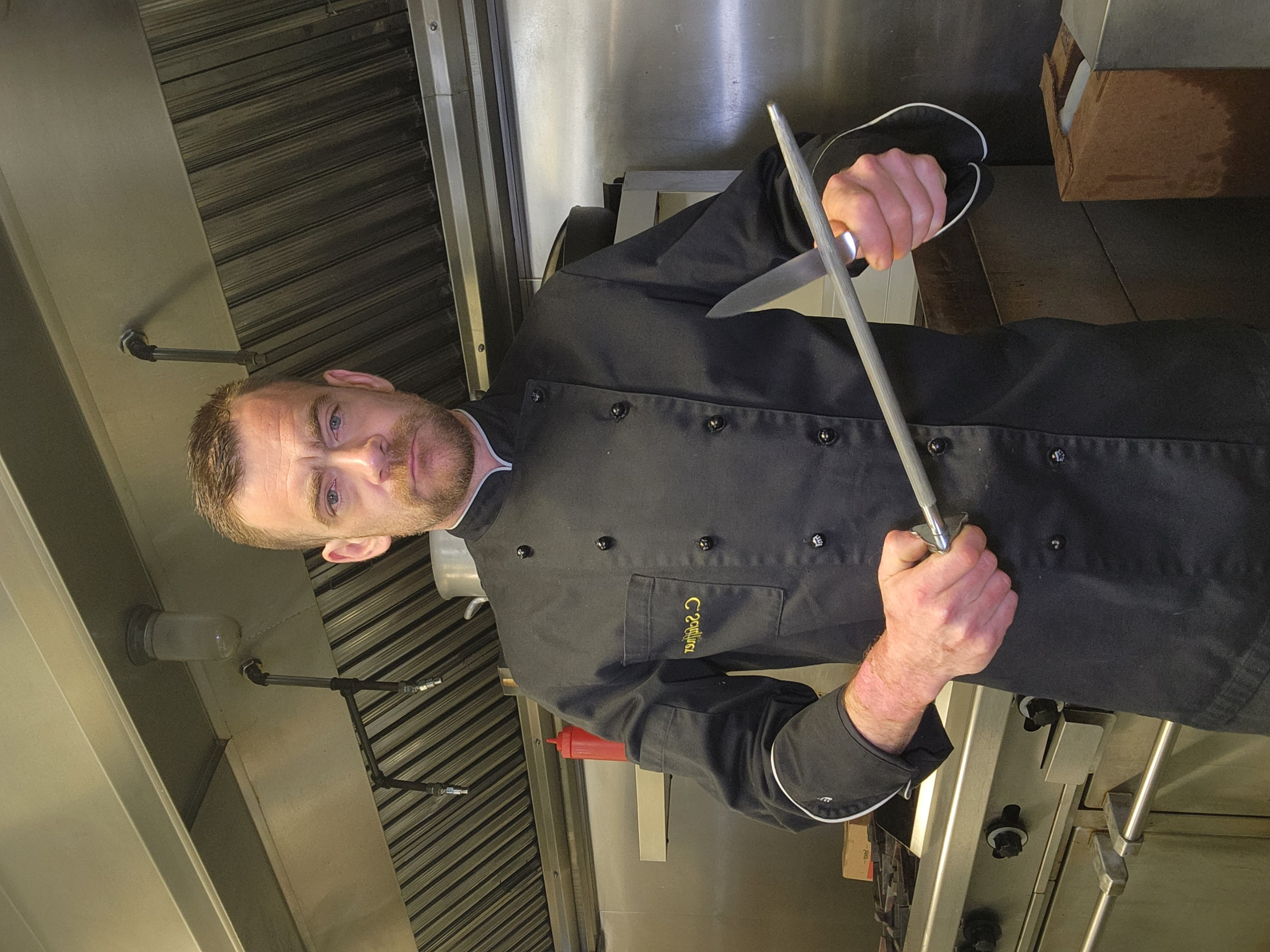
When I started tracking daily at my restaurant in Dawson City, I thought I knew my numbers. I'd been cooking for 20 years across five countries. Germany, Switzerland, Austria, Spain, Canada. I had my Kuchenmeister certification — German Master Chef. I'd run kitchens in resort hotels and fine dining restaurants. I thought I understood food cost.
I was wrong.
First week of daily tracking, I found that my Wednesday food cost was 41%. Forty-one percent. On a day that did $1,800 in revenue. I was prepping like it was Saturday because "what if we get busy?" We never got busy on Wednesday. Not once in three months of data.
That one fix — adjusting Wednesday prep pars to match actual Wednesday covers — saved me $340/week. That's $17,680 over the five-month season. From one number. On one day of the week.
Then I found the labor problem. I had a dishwasher scheduled for the full Tuesday shift. We did 22 covers on an average Tuesday. The dishwasher cost me $160 for that shift. I moved dishwashing to the prep cook's responsibilities on Tuesdays and saved $640/month.
Then the waste log showed me that my line cooks were prepping 15 lbs of mashed potatoes daily when we used 8 lbs on average. Seven pounds of mashed potatoes, thrown away every single day. At $2.30/lb in ingredient cost, that's $16.10/day or $2,415 over the season — in mashed potatoes alone.
None of this was visible on my monthly P&L. The monthly said "food cost: 34%." It didn't say "you're throwing away $16 in potatoes every day and spending $160 on a dishwasher who scrubs three sheet pans on Tuesdays."
Daily tracking isn't glamorous. It's not exciting. It's 15 minutes of looking at numbers that tell you the truth about your business. The truth your monthly P&L is too averaged out to show you.
How Leading Indicators Protect Your Margins
The five daily numbers are leading indicators. They show you what's happening now, not what happened last month. By the time your monthly P&L arrives, the damage is done and the money is spent.
Leading indicators let you act fast. A $200/day waste problem caught on day one costs you $200. Caught on day thirty, it cost you $6,000. Same problem. The only variable is when you saw it.
If you want a structured way to find where your restaurant is leaking money right now, sign up for the weekly newsletter. Every issue covers one specific profit recovery tactic you can implement the same week. No fluff. No theory. Just the numbers and the fix.
Frequently Asked Questions
How long does daily restaurant tracking take?
15 minutes. That's it. Pull your POS report, check yesterday's revenue against your forecast, calculate food cost and labor cost as a percentage of sales, review the waste log, and count the cash drawer. If it's taking longer than 15 minutes, your system is too complicated. Simplify it. The best daily tracking happens on a single sheet of paper or one spreadsheet tab.
Do I need software to track daily restaurant metrics?
No. A spreadsheet works. A notebook works. The $300/month inventory platforms are great, but they're not required. What's required is the habit. I tracked daily on a printed sheet taped to my office wall for the first six months. Cost me $0. Saved me thousands. Start with pen and paper. Upgrade when the habit is locked in and you need more detail.
What is the most important number for a restaurant owner?
Prime cost — food cost plus labor cost as a percentage of total revenue. If prime cost is under 60%, you have a business. If it's over 65%, you're in trouble. If it's over 70%, you're losing money even on busy nights. Track this weekly by rolling up your daily numbers every Sunday. It tells you more about your restaurant's health than any other single number.