A restaurant profit leak is money leaving your business that doesn't show up on your profit and loss statement. It's the food that spoils before you use it. The over-portioned plates. The supplier price creep you stopped checking. The staff turnover costing $5,864 per employee. Most independent restaurants have 5-8 active leaks across 9 categories, costing $2,000 to $10,000 per month.
That means you could be losing $24,000 to $120,000 per year. And your accountant won't catch it. Your P&L won't show it. Because profit leaks hide between the line items. They live in the gap between what you ordered and what actually hit the plate. Between the schedule you wrote and the labor you paid for. Between what your menu says and what your register collects.
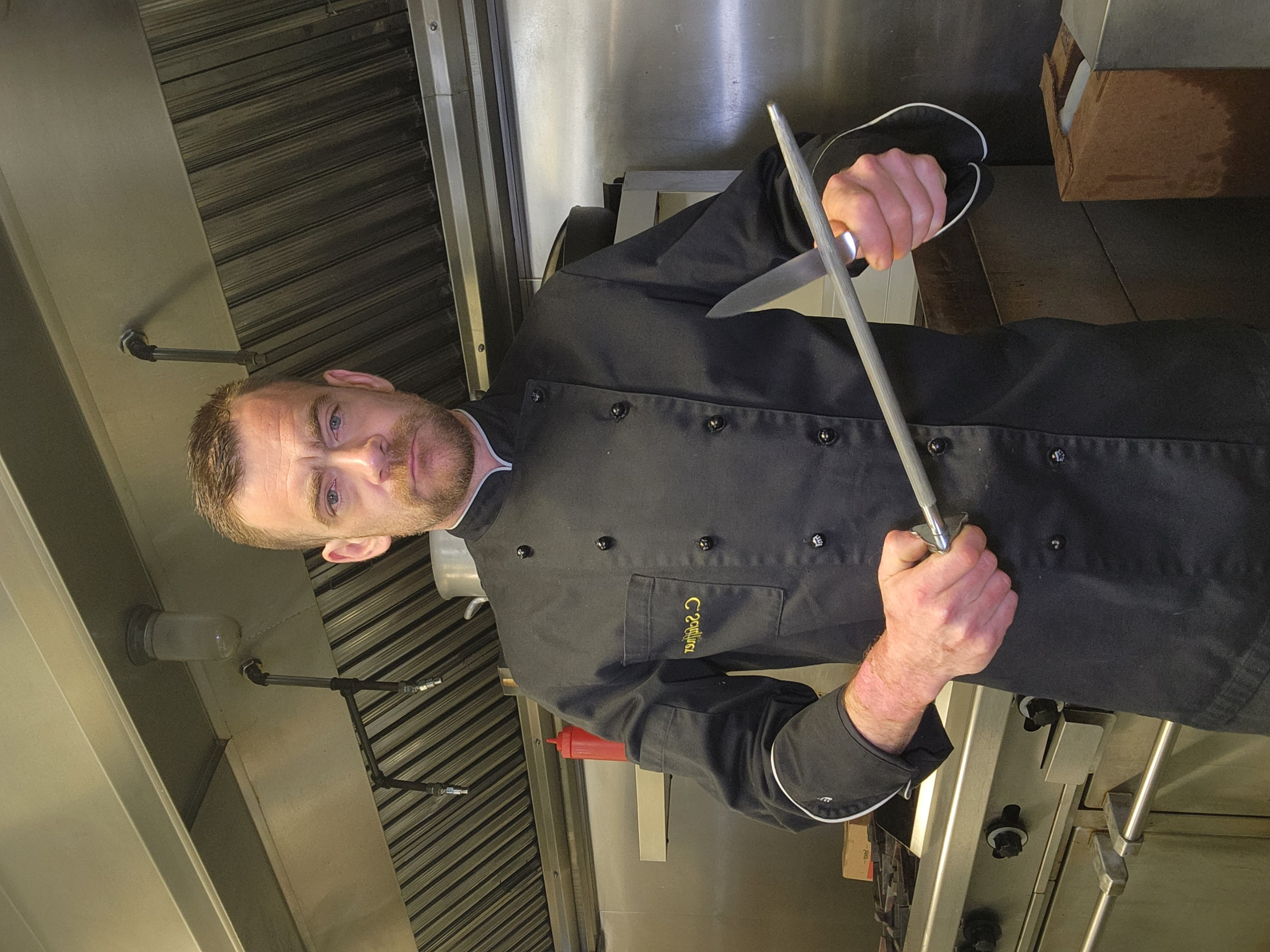
I've been cooking professionally for over 20 years across 5 countries. I've run kitchens in Germany, Switzerland, Austria, Spain, and Canada. And I can tell you this: every single restaurant I've ever worked in had profit leaks. Every one. The difference between the ones that survived and the ones that closed? The survivors found their leaks before the leaks found them.
The 9 Profit Leak Categories
After two decades of running and working in restaurant operations, I've mapped every profit leak into 9 categories. Your restaurant probably has active leaks in 5 to 8 of them right now. Here's what they are and what they cost.
1. Food Waste
Cost: $1,500 to $4,000 per month. This is the big one. Prep waste, spoilage, over-production, dropped plates, walk-in items that expire before you use them. The average restaurant wastes 4-10% of purchased food before it ever reaches a customer. That's not a rounding error. That's a car payment every month going into the trash.
2. Labor Misallocation
Cost: $800 to $3,000 per month. Not overstaffing. Misallocation. Your best cook is doing prep work a $15/hour employee could handle. Your servers are rolling silverware during peak when they should be turning tables. The wrong people doing the wrong tasks at the wrong time. You're paying for skill you're not using.
3. Staff Turnover
Cost: $5,864 per employee replaced. That number includes recruiting, training, the learning curve where they're slow and making mistakes, and the lost productivity of whoever has to train them. If you lose 4 employees a year, that's $23,456. And most independent restaurants lose more than 4.
4. Menu Mispricing
Cost: $1,000 to $3,500 per month. Your best-selling item might be your biggest money loser. If your most popular dish has a 38% food cost and you're selling 40 of them a day, you're bleeding cash every time a customer orders it. Most operators price by gut feel or by copying the place down the street. Neither works.
5. Supplier Overpayment
Cost: $500 to $2,000 per month. When was the last time you compared prices across suppliers? Most operators set up their accounts and stop looking. Suppliers know this. They creep prices up 2-3% per quarter. Over a year, that's 8-12% more than you need to be paying. On $15,000/month in food purchases, that's $1,200 to $1,800 walking out the door.
6. Delivery Platform Fees
Cost: $600 to $2,500 per month in hidden margin loss. You know they take 15-30%. But are you tracking the net contribution margin on delivery orders after packaging, extra labor, and mistakes? Most operators see delivery revenue and feel good. They don't see that 40% of delivery orders actually lose money after all costs.
7. Beverage Shrinkage
Cost: $400 to $1,500 per month. Over-pouring. Free drinks for friends. Bartender giveaways. Spillage. Theft. The bar should be your highest-margin profit center. For most restaurants, it's leaking 15-25% of potential beverage profit through shrinkage nobody tracks.
8. Operational Waste
Cost: $300 to $1,200 per month. Lights left on. Equipment running when nobody's in the kitchen. Chemicals and cleaning supplies used at double the recommended rate because nobody reads the labels. Takeout containers that cost $0.45 each when the $0.18 version works fine. Small numbers. They add up fast.
9. Untracked Comps and Discounts
Cost: $200 to $1,000 per month. The manager who comps a table to avoid a bad review. The server who gives a free dessert to a regular. The owner who feeds friends and doesn't ring it in. Every untracked comp is invisible on your P&L. You can't fix what you can't see.
The 9 Leak Categories at a Glance
Food waste ($1,500-$4,000/mo) + Labor misallocation ($800-$3,000/mo) + Staff turnover ($5,864/employee) + Menu mispricing ($1,000-$3,500/mo) + Supplier overpayment ($500-$2,000/mo) + Delivery fees ($600-$2,500/mo) + Beverage shrinkage ($400-$1,500/mo) + Operational waste ($300-$1,200/mo) + Untracked comps ($200-$1,000/mo). Total potential exposure: $5,300 to $18,700 per month. Most operators are losing $2,000 to $10,000 of that.
Why Profit Leaks Stay Hidden
Here's the problem. Most restaurant owners look at their numbers once a month. Maybe. They get their P&L from their accountant. They see total food cost, total labor, total revenue. And the numbers look... okay. Not great. But okay.
That's the trap.
Monthly accounting shows averages. Averages hide spikes. A Tuesday where you threw out $400 in prep gets averaged into a week where food cost looked "normal." A Saturday where you had 3 extra staff for a rush that never came gets smoothed into a monthly labor number that seems reasonable.
Profit leaks are daily problems. Monthly tracking can't catch them.
Think about it this way. If your doctor checked your heart rate once a month, they'd see an average. They wouldn't catch the spikes. They wouldn't see the arrhythmia. They'd say "looks normal" while something dangerous was happening between visits.
Your restaurant's financial health works the same way. The daily numbers tell the real story. The monthly numbers tell you a bedtime story.
You need weekly tracking at minimum. Daily is better. And you need to track by category, not just totals. Total food cost doesn't tell you that your proteins are at 42% while your produce is at 12%. It just shows 30% and you think everything's fine.
The 72-Hour Discovery Method
You don't need a consultant. You don't need expensive software. You need 72 hours and a willingness to look at the truth.
Here's the method.
Day 1: Pull your real numbers. Not your "I think" numbers. Your actual numbers. Invoices from the last 4 weeks. Your POS data. Your schedule and actual clock-ins. Your waste log (if you have one — most don't). Your comp reports. Pile it all up. Don't analyze yet. Just collect.
Day 2: Map every dollar to one of the 9 categories. Where is money leaving? How much? Rank the leaks by dollar amount, not by percentage. A 2% food cost increase on $20,000/month in food purchases is $400/month. A 15% beverage shrinkage rate on $3,000/month in bar sales is $450/month. The percentage might look small. The dollars tell the truth.
Day 3: Pick the #1 leak and build a one-page protocol to fix it. Not all 9. Not the top 3. Just the biggest one. Write down: what's the leak, how much is it costing, what's the fix, who owns it, and how will you measure it next week. One page. That's your first protocol.
I walk through this entire process step by step in the 72-Hour Restaurant Audit guide.
The Leaks I Found in My Own Restaurant
I want to tell you about the worst year of my career. Not because it's fun. Because it's proof that this stuff is real.
I was running Grumpy Schnitzel in Dawson City, Yukon. Population 1,300. Seasonal tourism. Short summers. Long winters. I was a Kuchenmeister — a German Master Chef with years of training. I knew food. I knew kitchens. I thought I knew my numbers.
I didn't.
When I finally sat down and ran the math — really ran it — I found $41,000 in waste in year one. Forty-one thousand dollars. In a restaurant in a town of 1,300 people.
Here's where it was hiding. My proteins were over-portioned by 15-20%. Not because my cooks were careless. Because I never gave them portion specs. I assumed they'd know. They didn't. That was $1,200 a month right there.
My prep waste was brutal. We'd prep for a Saturday rush on Thursday. By the time Saturday came, half the mise en place was past its prime. I was prepping based on hope, not on data. Another $800 a month.
My supplier was creeping prices on me. Same order, same items, 3% more every quarter. I hadn't compared a single invoice against the contract in 8 months. That was $600 a month I was gifting them.
And comps. I was comping meals for locals to build goodwill. Smart move, right? Except I never tracked it. When I finally counted, I was giving away $400 a month in food I wasn't accounting for. My food cost was 4% higher than my P&L showed because those comps were invisible.
That experience — finding $41,000 I didn't know I was losing — is what made me build the Profit Leak Calculator. Because if a trained Master Chef with 20 years of experience could miss that much, every operator is missing something.
"I was $370K in debt, running on fumes, and telling myself I just needed more customers. I didn't need more customers. I needed to stop the bleeding."
How the 8 Leak Categories Calculator Fixes This
I built the Profit Leak Calculator to do in 5 minutes what took me months to figure out the hard way.
You answer questions across the 8 key leak categories. The calculator scores each one. It shows you where the biggest dollar leaks are hiding. And it tells you which one to fix first.
No guessing. No "I think my food cost is probably okay." Real categories. Real dollar estimates. Real priority ranking.
It's free. It takes 5 minutes. And it gives you the same starting point that helped me recover $41,000 in my first year of actually tracking.
Because here's what I've learned after 20 years in kitchens across 5 countries: the restaurants that make money aren't the ones with the most customers. They're the ones that stopped losing money they didn't know they were losing. If you want a guided walk-through of this process, see how restaurant profit recovery works.
Your profit leak is there. Right now. Draining cash while you read this. The only question is whether you find it this week or let it run for another year.
Frequently Asked Questions
How much money do restaurants lose to profit leaks?
Most independent restaurants lose $2,000 to $10,000 per month to profit leaks they don't know about. That's $24,000 to $120,000 per year walking out the door without ever showing up on a P&L statement. The average operator I work with finds $3,400 per month in recoverable leaks within the first 72 hours of tracking.
What is the biggest profit leak in most restaurants?
Food waste is the biggest profit leak in most restaurants, costing $1,500 to $4,000 per month. But the most expensive leak overall is usually staff turnover, which costs an average of $5,864 per employee to replace. The difference is food waste is constant and daily, while turnover hits in expensive bursts. Both need tracking.
How quickly can I find my profit leaks?
You can identify your top 3 profit leaks in 72 hours using the 72-Hour Profit Discovery method. Day 1: pull your real numbers across 9 categories. Day 2: rank the leaks by dollar impact. Day 3: build a one-page fix for the biggest one. Most operators find $2,000 to $5,000 in monthly recoverable waste in the first pass.