Menu cross-utilization means designing every ingredient to appear in more than one dish. One protein covers two completely different tickets. One cheese runs through every burger and every stacker. Nothing sits in your walk-in waiting on a single dish. When you build a menu this way, a slow night for one item does not kill your food cost for the week.
Most independent operators do not design for this. They buy to the shelf. They build a dish, spec its ingredients, and order those ingredients in the quantities that dish requires. Which sounds logical until Tuesday is slow and the pork you ordered for that one special is aging in the walk-in by Thursday.
Cross-utilization is the cheapest margin lever in your kitchen. It costs nothing to redesign a menu around it. And almost nobody does it on purpose.
Why Most Menus Are Built Backwards
The typical independent menu gets built the same way every time. Chef or owner has a concept. They write dishes they want to cook. They spec ingredients per dish. They order those ingredients. They price the dishes and hope the math works out.
The problem is that model treats every dish as its own island. The lamb shank needs braising liquid, aromatics, and a side. The risotto needs Parmesan and stock. The salmon needs a glaze and a specific herb. None of these items talk to each other. You end up with a walk-in full of ingredients that are each tied to one or two dishes, with no redundancy built in.
When those dishes move slowly, the ingredients do not move at all. You throw out product. You write off the waste. Your food cost spikes. You blame it on bad luck or a slow week, when the real problem was the menu architecture.
The NRA puts food waste before the plate at 4 to 10 percent of purchased food. On a million dollars in revenue that is $30,000 to $75,000 a year walking out the back door. A significant portion of that is not operational carelessness. It is structural. It is what happens when you build a menu full of single-use ingredients.
What Cross-Utilization Actually Looks Like
The rule is simple. Every ingredient needs at least two jobs. If a product only appears in one place on your menu, it is a liability. It sits at full risk on any night that dish moves slowly.
Cross-utilization works across every category:
- Proteins: A whole cut broken down into multiple preparations at different price points. Same purchase, two or three different tickets.
- Cheese: One block of cheddar runs through your burger, your deli stack, your add-on list. You buy in volume. You get better pricing. You move it consistently regardless of which item sells.
- Sauces and stocks: House-made stocks built from trim and bones become the base for gravies, braises, soups. No trim hits the bin. It all earns revenue.
- Produce: Caramelized onions, roasted peppers, pickled vegetables — prep them once and deploy them across four dishes. One prep session, multiple applications.
The cleaner the cross-utilization, the less your food cost depends on any one dish selling well. You are spreading risk across the whole menu while tightening your ordering list and your prep load.
The Grumpy Schnitzel Pork Loin: A Worked Example
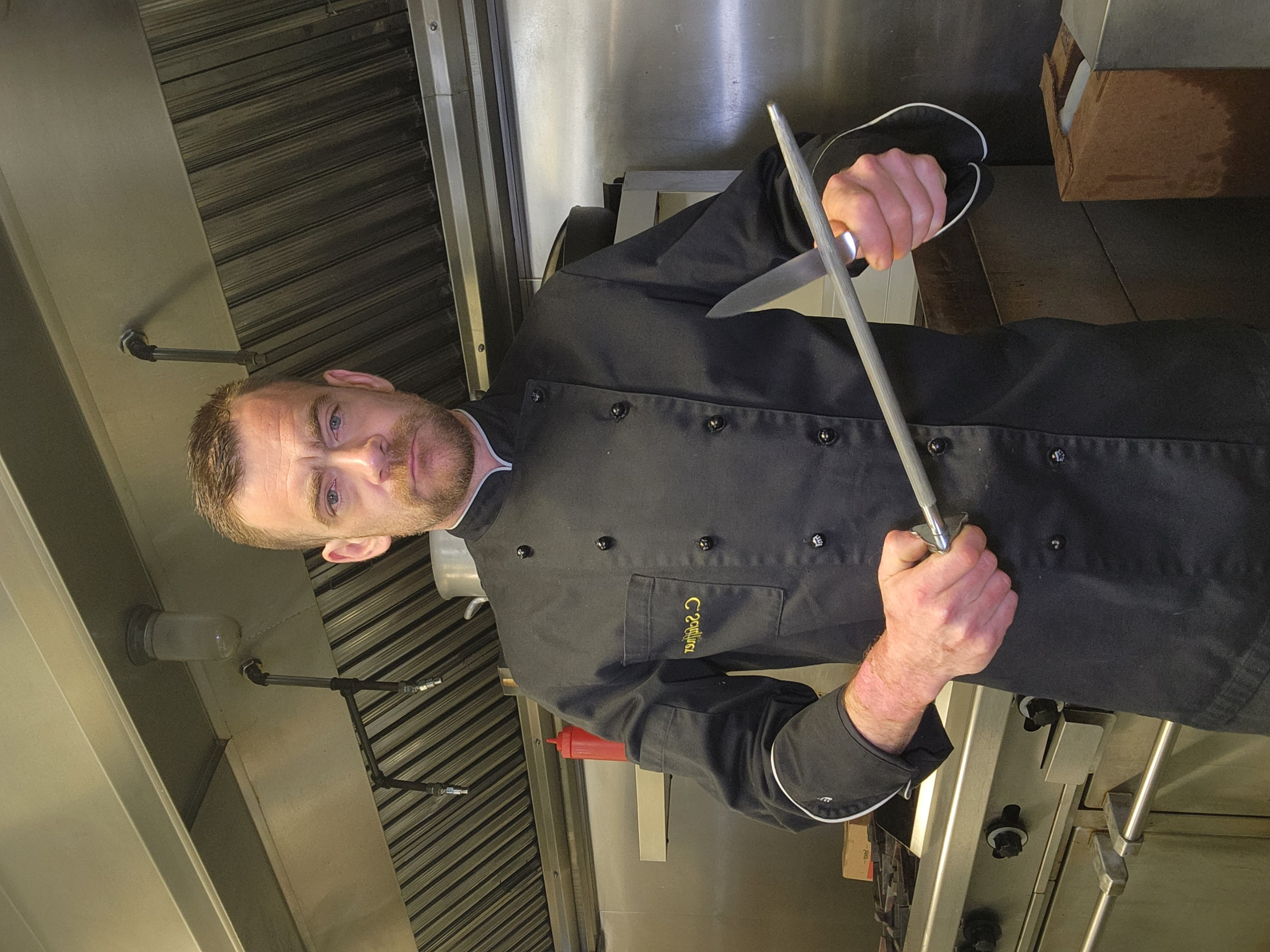
When I ran the Grumpy Schnitzel in Dawson City, the pork loin was the spine of the menu. Every ingredient had to earn its place by appearing in more than one dish. The pork loin did almost everything.
Bought whole. Sliced into schnitzel — two pieces, 80 to 90 grams each — on nearly every ticket that went out. That same preparation, the same cut, the same mise en place, also became the patty in the Yukon Slammer burger. One protein. Two completely different tickets at different price points, hitting different guests, covering different service moments.
The trim did not go in the bin. Pork trim went into a 12-hour stock that became the base for the Black Forest mushroom gravy over the schnitzel and the spaetzle. The same purchase created the main, the burger, and the sauce. Nothing stranded on a single dish.
Cheddar ran the same way. Same block across every burger, every deli stacker, the add-on list. One SKU, consistent movement regardless of which item sold.
Cross-utilization combined with a zero-waste protocol held food cost at roughly 33.7 percent blended — 28 percent at the July peak — while sales nearly doubled. A menu that cross-utilizes forgives a slow night.
How to Audit Your Menu for Stranded Ingredients
Pull your current menu and your ordering sheet. For every item you order, write down every dish it appears in. If an ingredient has only one dish next to its name, that is a stranded ingredient. It is carrying full risk with no coverage.
Do that audit and most operators find that 30 to 50 percent of their ordering list is stranded. One specialty cheese for one appetizer. One sauce component for one protein. One produce item for one salad. That is not a menu. That is a collection of isolated dishes wearing a menu's clothing.
The next step is not to cut those dishes immediately. It is to ask: what else could this ingredient do? Can the specialty cheese move to a flatbread or a board? Can the sauce component become a dipping option or a glaze on something else? Can the produce item be repurposed into a side or a topping?
Sometimes the answer is no, and you cut the ingredient along with the dish. Sometimes the answer opens up a new dish that actually fits your concept better than what you had. The menu engineering process — classifying items by profitability and popularity — pairs directly with this audit. A dish that is a Dog on the matrix and uses three stranded ingredients is a straightforward cut.
Rebuilding the Menu Around Spine Ingredients
The most reliable approach is to start with your proteins and build the menu outward from them. Choose two or three proteins you can buy in whole cuts at volume. Then design multiple dishes that use each protein differently — different preparations, different price points, different positions on the menu.
A whole chicken gives you a roast breast entree, a thigh confit on a smaller plate, a stock from the carcass that runs through your soups and sauces. A pork loin gives you a schnitzel, a burger patty, trim stock for gravy. A side of salmon gives you a grilled entree, a smoked application on a starter, and trim for a fish cake or a staff meal that keeps your team fed without a separate protein order.
Once your proteins are covered, do the same with your dairy. One aged cheddar. One soft cheese if your concept calls for it. Run them through everything that can carry them. Buy in volume, move consistently, and stop paying premium pricing for specialty items that only one dish justifies.
Then look at your produce. What do you prep in volume? What gets used once and sits? Anything that sits is a candidate for redesign. Can you build a dish around it? Can you prep it in a way that makes it useful in three different places? House-made pickles, roasted garlic, compound butters — these are the kinds of bridge components that show up across a well-engineered menu and cost almost nothing to produce from ingredients you already have.
If you want help rebuilding the actual architecture, the Profit Recovery Engagement works through your full menu structure over 21 days. We identify the stranded ingredients, redesign the cross-utilization map, and recalculate your food cost targets at the same time. That is not theory — it is operator-to-operator rebuild work.
What Happens to Food Cost When You Get This Right
Cross-utilization does not require you to lower your food cost targets on any individual dish. The math works differently. You are reducing waste on the purchasing side, which means more of what you buy actually converts to revenue.
When an ingredient appears in three dishes instead of one, you can order it with more confidence. You know it will move. You can spec tighter quantities because you are not padding the order to cover for slow nights on a single dish. You reduce the write-off rate on that ingredient, which brings your effective food cost down without touching your recipes or your pricing.
The Operator's Toolkit has the recipe costing template and the food cost tracker that make this math visible. You can map each ingredient across your menu, calculate how many dishes cover it, and see immediately which items are stranded. Forty-seven dollars. The math it shows you is worth more than that on the first audit.
The average restaurant food cost runs 28 to 35 percent of revenue. Operators who design for cross-utilization tend to sit at the lower end of that range, not because they cut corners on product quality, but because almost none of what they buy goes to waste. Every dollar of protein purchased converts to a ticket. Every dollar of produce prepped ends up on a plate. The walk-in stops being a graveyard and starts being a system.
The Slow Night Test
Here is the simplest way to evaluate your current menu. Pick your slowest night last month. Pull the ticket count. Now look at which dishes did not sell that night, and identify every ingredient that was on order specifically for those dishes.
That is your exposure. That is the product that aged in your walk-in because one section of your menu went cold on one night. If cross-utilization had been built in, those same ingredients would have shown up on other tickets. They would have moved through a different dish. The slow night for one item would not have stranded your purchasing.
A menu that cross-utilizes does not require a perfect week to stay healthy. It has coverage built into the architecture. Tuesday can be slow on the schnitzel. If the same pork is moving through the burger, the stock, and the daily special, Tuesday does not hurt you.
That is the whole point. Build the menu so a slow night on any single dish does not strand product. Design coverage in. Then a bad week is just a bad week, not a food cost crisis.
Frequently Asked Questions
What is menu cross-utilization in a restaurant?
Menu cross-utilization means deliberately designing your menu so every ingredient appears in more than one dish. Instead of buying a protein or produce item that only one menu item uses, you engineer the menu so that same ingredient earns its place across multiple tickets. The result is lower food cost, less waste, and a kitchen that stays profitable even when a single dish has a slow night.
How does cross-utilization reduce restaurant food cost?
When an ingredient is stranded on a single dish, a slow night for that dish leaves that product aging in your walk-in. Cross-utilization spreads the risk: if one dish moves slowly, the same ingredient is still being pulled through other tickets. Less aging product means less spoilage, fewer write-offs, and a food cost percentage that stays tight instead of spiking on bad weeks. You also gain purchasing power because you are buying higher volumes of fewer SKUs, which often earns better supplier pricing.
What ingredients are best for cross-utilization?
Proteins are the highest-leverage starting point because they carry the most food cost risk. A whole pork loin, a whole chicken, or a side of salmon can be broken down and directed across multiple dishes at different price points and presentations. After protein, look at cheeses, produce items like roasted peppers or caramelized onions, and house-made sauces or stocks. The rule is simple: if an ingredient only appears in one place on your menu, it is a liability. Every ingredient should have at least two jobs.