To reduce restaurant food waste, stop relying on reminders and start using a trim-and-off-cut protocol: a written system that assigns every scrap a pre-decided second life before prep begins. Protein trim goes to stock. Bones go to gravy base. Off-cuts go to a secondary dish or staff meal. Nothing hits the bin by default. The system runs on decisions, not discipline.
The NRA puts pre-plate food waste at 4-10% of purchased food. On $1M in revenue, that is $30,000 to $75,000 per year leaving through the garbage can — quietly, during prep, in a way that never shows up on a P&L line. Most operators know the waste is there. They just haven't built a system to stop it.
Waste is not a "be more careful" problem. Careful doesn't scale. Staff change, prep days get busy, and the first thing to slip is the thing that requires effort. A protocol doesn't require effort. The decision is made once. Execution is automatic.
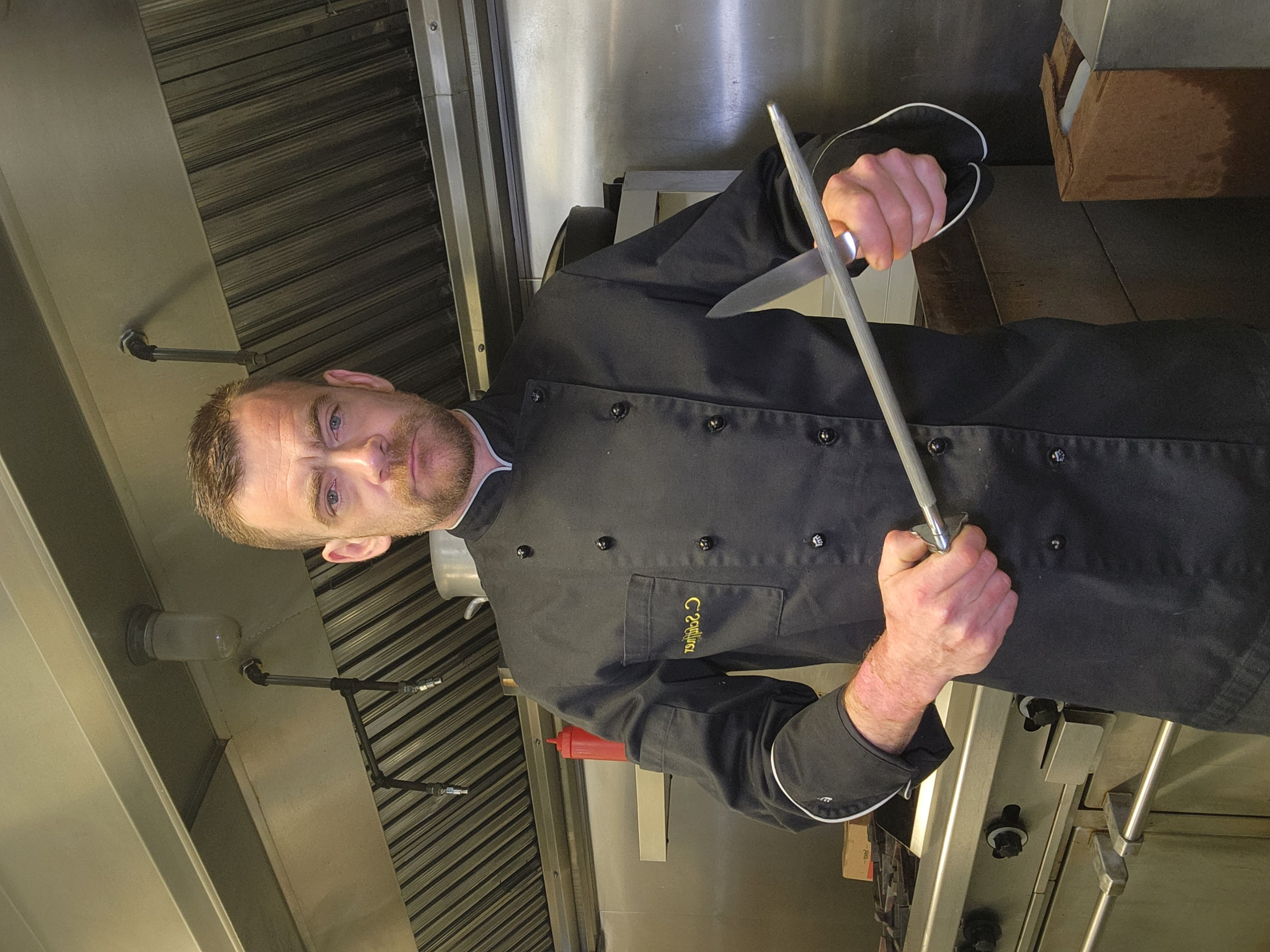
Here is the system I ran when I was on the pass at the Grumpy Schnitzel. Nothing got wasted. Every trim, every off-cut had a pre-decided second life before the knife hit the protein. And that system was one of four levers that held food cost to a 33.7% blended average — with a 28% peak in July — while sales were nearly doubling.
Why "Be More Careful" Doesn't Work
Every kitchen has a version of the waste conversation. Someone throws out a container of trim. The chef gets annoyed. They remind the team to be more careful. It works for three days. Then it slips.
The problem isn't the team. The problem is the system. Or the absence of one.
When a cook finishes butchering a pork loin, they have a decision to make: what do I do with this pile of trim? If there is no clear answer — no pre-decided destination — the default is the bin. Not because they don't care. Because the decision costs mental energy they don't have mid-prep, and the bin is right there.
A trim-and-off-cut protocol removes the decision. The trim goes in the stock pot. Full stop. That answer was decided last week, written on the prep sheet, and it never changes. No mental energy required. No reminder needed.
Waste drops because you engineered the failure path closed — not because you asked people to try harder.
What the Protocol Actually Looks Like
A trim-and-off-cut protocol has three components: a trim inventory, a destination map, and a daily log.
1. The Trim Inventory
Walk your prep list and write down every item that generates trim or off-cuts. For a schnitzel concept, that list looks something like:
- Pork loin — silver skin, fat cap, end trim
- Chicken breasts — tenderloin, trim
- Vegetables — carrot tops, onion skins, celery leaves, mushroom stems
- Herbs — parsley stems, thyme stalks
- Bones — from any whole-animal butchering
This list is not an estimate. You write it down from an actual prep observation. One day, one prep session, one real list of what actually comes off your proteins and vegetables. That is your starting inventory.
2. The Destination Map
For every item on the trim inventory, you assign a destination. Not "figure it out in the moment" — a specific, written destination.
- Pork trim — stock pot (12-hour simmer)
- Chicken trim — staff meal or secondary protein for a daily special
- Vegetable scraps — stock pot (added at hour 8, not the start)
- Herb stems — stock pot or discard (no crossover of strong flavors)
- Mushroom stems — diced for gravy base or soup
The destination map lives on the prep sheet. It is not a memo. It is not a posted sign. It is part of the daily prep document, reviewed every morning at the start of prep. If it is not on the prep sheet, it will not get followed.
3. The Daily Waste Log
A simple two-minute log at the end of prep: what was trimmed, how much, where it went. Not a spreadsheet — a clipboard on the wall or a line in your daily ops notes. The purpose is visibility. When waste is tracked, it gets managed. When it is invisible, it compounds.
If you want a pre-built log format, the Operator's Toolkit includes a daily waste tracking template alongside the other operational sheets operators need to run a tighter kitchen.
The Pork-Loin-to-Gravy Chain: A Worked Example
The Grumpy Schnitzel Trim Protocol in Action
When I butchered pork loins for schnitzel service, the silver skin, fat cap, and end trim never hit the bin. They went straight into a stock pot. 12 hours on a low burner. That stock became the base for the Black Forest mushroom gravy that went over the schnitzel and spätzle.
The protein was already paid for by the schnitzel sale. The trim — the part that used to be garbage — became the best gravy on the menu. The cost of that gravy was time and a low burner. The pork trim itself was already on the invoice. We just stopped throwing it away.
Food cost on the trim: zero incremental. Value delivered: the dish that sold the most schnitzel.
That is the logic of the trim protocol. The protein is already paid for the moment it comes off the delivery truck. Every piece of it that hits the bin is margin you bought and then threw away. The protocol turns that sunk cost into a second application.
When I was on the pass at the Grumpy Schnitzel, I felt every dollar that went in the bin personally. The owner-operator relationship with food cost is visceral in a way that a hired chef doesn't always feel. You signed the invoice. You know exactly what that pork loin cost per kilo. Watching trim disappear into a garbage bag is not abstract — it is a direct deduction from your pocket.
That feeling is useful. But it is not a system. The protocol is what makes it sustainable when you are not standing there watching every cut.
What This Does to Your Numbers
The NRA's 4-10% waste figure is a pre-plate estimate. It covers exactly what a trim protocol targets: everything that gets trimmed, portioned, or prepped out before a dish ever reaches a customer. That range is wide because most operators have no idea where they sit in it. They have never measured it.
When I ran a diagnostic on one operation, I found $41,000 in waste and leak that the owner didn't know existed. Not all of it was trim — but a meaningful share was protein and produce that was being bought, prepped, and discarded without a second application. The invoice was paid. The value was thrown out.
A trim protocol does not eliminate all waste. It addresses the pre-plate trim category systematically. On a $1M operation, moving from the top of the NRA range to the bottom — from 10% to 4% — is $60,000 in recovered margin. Not all of that is trim. But trim is the easiest piece to fix because it happens at a predictable moment in a predictable location: the prep station, every morning.
You do not need to find $60,000. You need to start recovering what is leaving your kitchen today. If you want to see where the biggest leaks are across your whole operation before fixing individual line items, the free Profit Leak Calculator maps nine categories in five minutes — waste is one of them.
How to Implement This in Your Kitchen This Week
Start with one protein. Not the whole menu — one protein, one prep day.
Set a separate container next to your butchering station. Everything that comes off that protein goes in the container instead of the bin. At the end of prep, look at what you have. Write down what it is. Then decide: stock pot, secondary dish, staff meal, or true discard (anything unsafe or inedible).
Run that for two weeks. One protein. One container. One decision per trim type, made once, written down. At the end of two weeks, you have a real trim inventory for that protein and a working destination map.
Then expand to the next protein on your butcher list.
Do not try to fix everything at once. A trim protocol built on one protein and followed consistently beats a comprehensive system that falls apart in week one because it asked too much of prep cooks who are already busy.
The Stock Rotation
The stock pot is the backbone of any trim protocol. It is also the simplest piece to install. A pot on the back burner, started at the beginning of prep, running at a low simmer. Bones and protein trim go in at the start. Vegetable trim goes in at hour eight (earlier and the stock turns bitter from certain vegetables).
At end of service, cool the stock, portion it into labeled quart containers, and refrigerate. That stock is the base for tomorrow's sauces, gravies, and braises. It is not a special project — it is the last step of prep, built into the daily routine.
A 12-hour stock from pork trim costs you a low burner, water, and 10 minutes of active work. The protein that made it was already on your invoice. You paid for it. You might as well use it twice.
The Missing Piece Most Kitchens Skip
The trim protocol addresses what you do with scraps. But there is a second layer that most operators miss: cross-utilization on the menu itself.
The pork loin trim becomes gravy. But if the gravy only works on one dish, you have limited the value of that stock. If the same gravy base works on three dishes, you have multiplied it. If your vegetable stock covers two soups and a braise, you have built redundancy into your prep.
Every ingredient that appears in only one dish is a liability. The more dishes share a prep component, the more resilient your kitchen becomes to waste, delivery failures, and demand shifts. This is the logic behind menu cross-utilization — and it is what separates a menu that was designed from a menu that just accumulated.
When I ran protein prep for service, my pork loin fed the schnitzel, the gravy, and the daily staff meal. My stock covered the gravy base and a soup. When a delivery came short, I had options. When prep ran behind, I had a head start. That flexibility does not come from being resourceful in the moment. It comes from engineering the menu so the trim has somewhere to go before the knife touches the loin.
Frequently Asked Questions
How much food waste does a typical restaurant produce?
The NRA puts pre-plate food waste at 4-10% of purchased food — that translates to $30,000 to $75,000 per year on $1M in revenue. Most operators don't see it because it disappears quietly into the bin during prep, not on a report.
What is a trim-and-off-cut protocol for restaurants?
A trim-and-off-cut protocol assigns every scrap — protein trim, bones, fat, vegetable peel — a pre-decided second life before any prep begins. Nothing goes in the bin by default. Trim becomes stock. Bones become gravy base. Off-cuts go to a secondary dish or staff meal. The protocol is written down and followed the same way every service.
How do I start reducing food waste in my restaurant?
Start with one protein. Set a separate container next to your butchering station and collect everything that currently goes in the garbage during prep. At the end of the day, assign each trim type a destination — stock pot, secondary dish, or staff meal. Write it on your prep sheet. Run that system for two weeks before expanding to the rest of your butcher list.