Stop chasing food cost percentage. Start tracking what each plate actually puts in your pocket.
Most food cost advice tells you to negotiate with suppliers, buy cheaper ingredients, and shrink your portions. That works — until your customers notice and your staff stops caring. You've cut costs and quality at the same time.
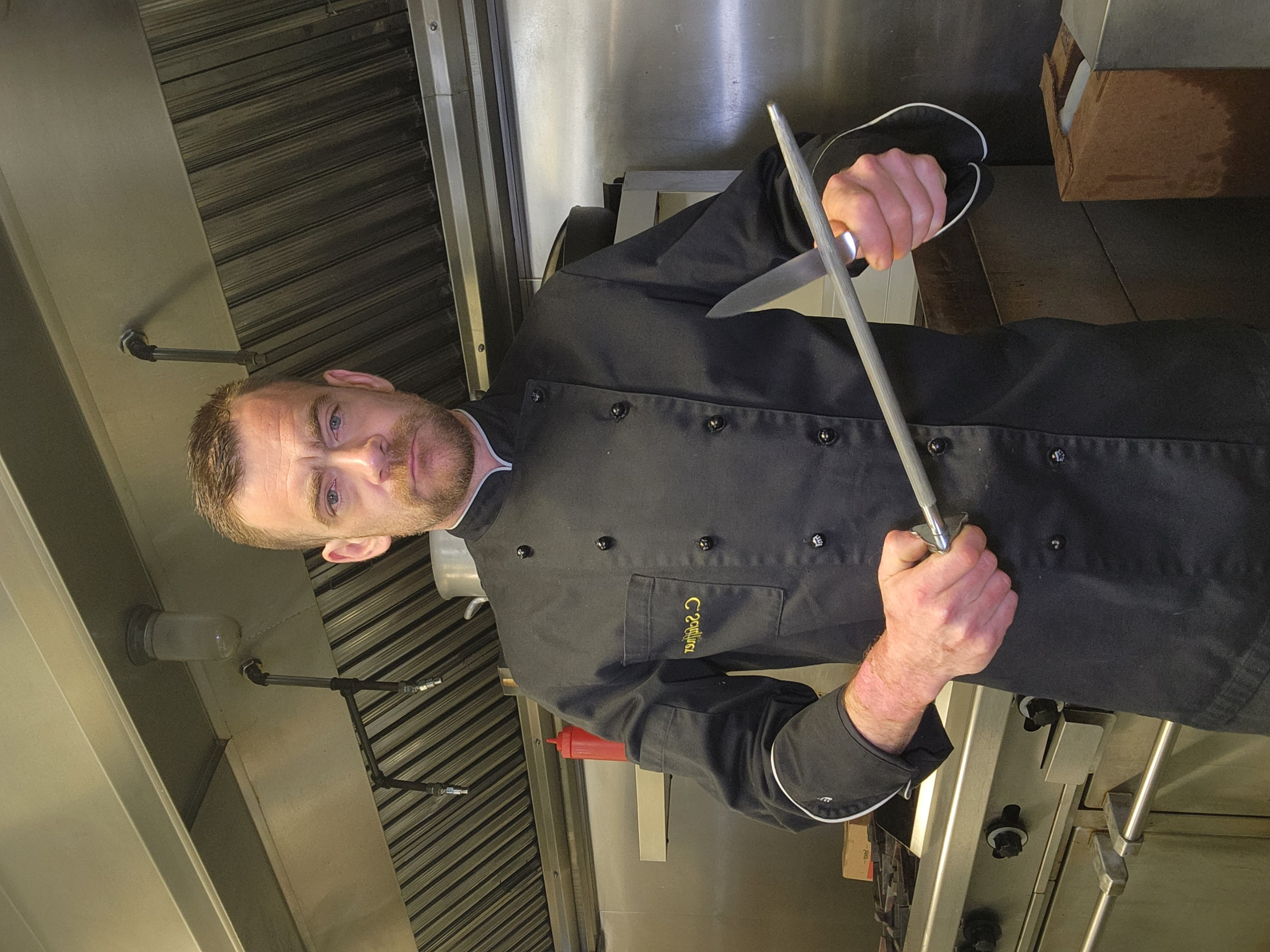
After 20 years in kitchens across 5 countries — and losing $370K CAD learning the hard way — I can tell you the operators who actually fix food cost don't start with cheaper ingredients. They start with better information.
Here's the system that changed everything for me — and the one I teach now. Three steps. No software subscription required.
The Metric That's Lying to You
Every POS system shows food cost percentage. Every culinary school teaches it. Every article on this topic tells you to "keep it under 30%."
Here's why that advice is incomplete.
A $16 salad at 25% food cost makes you $12 per plate.
A $48 steak at 38% food cost makes you $29.76 per plate.
Which one do you want to sell more of?
If you manage by food cost percentage, you push the salad. If you manage by contribution margin — the actual dollars each plate puts in your pocket — you push the steak.
Food cost percentage measures efficiency. Contribution margin measures profit. They're different conversations. Most operators are having the wrong one.
Contribution Margin Formula
Selling price − food cost in dollars = contribution margin
That's it. That's the number your
POS doesn't show you. And it changes everything about how you price, position, and promote your menu
items.
Step 1: Track What Actually Moves the Needle
Before you cut a single ingredient, you need to know where your money is actually going. Not what your POS report says — what's happening plate by plate.
For every dish on your menu, calculate three things:
- Actual food cost in dollars (not percentage)
- Contribution margin per plate
- Weekly sales volume
Most operators know their top sellers. Almost none know their top earners. These are different lists.
I once had a dish that was our #3 seller. Great food cost percentage — 26%. Looked perfect on paper. When I ran the contribution margin, it was making me $9.80 per plate. My #8 seller — a dish I almost cut — was making me $24.50 per plate at 36% food cost.
The "efficient" dish was my trap. The "expensive" dish was my money maker.
Do this first: Pick your top 10 sellers. Calculate contribution margin on each one. I guarantee at least 2-3 of them will surprise you.
Step 2: Discover Your Stars and Dogs
Once you have the numbers, every dish on your menu falls into one of four categories. This is called a menu engineering matrix — the restaurant industry has had this framework since 1982, but almost no independent operator uses it.
Stars — High contribution margin, high popularity. Your money makers. Feature them. Promote them. Never touch them.
Plowhorses — Low contribution margin, high popularity. People love them, but they're not making you much per plate. Re-engineer the recipe, adjust the portion, or raise the price carefully.
Puzzles — High contribution margin, low popularity. Hidden gold. They make great money when they sell — they just don't sell enough. Better menu placement, a two-line description, or a server recommendation fixes this.
Dogs — Low contribution margin, low popularity. Nobody orders them, and when they do, you barely make money. Cut them. Free up the prep time, the walk-in space, and the mental energy.
A typical 40-item menu has 8-12 Dogs sitting on it right now. Each Dog costs you prep hours, ingredient waste, and walk-in space for items that contribute almost nothing.
I cut 4 Dogs from my menu in one afternoon. Freed up 6 hours of prep per week. Nobody — not one customer — asked where those dishes went.
Step 3: Drive Profit Without Raising Prices
Here's where it gets interesting. Once you know your Stars, you can increase profit without changing a single price.
Menu placement matters more than you think. Where a dish sits on your menu changes what people order. A Star buried on page two doesn't sell. The same dish in a high-attention zone — top right of a two-page menu, first item in a section, or boxed separately — sells 15-20% more.
Descriptions sell. "Grilled Chicken Breast" and "Free-Range Chicken, Fire-Grilled, Served on Roasted Garlic Mash with Pan Jus" are the same dish. The second version sells for $4 more and gets ordered more often. That's not a price increase — that's engineering.
Server recommendations move mountains. If your servers know which 3 dishes are Stars, a simple "I'd recommend the..." drives additional daily contribution margin. $300/day × 20 operating days = $6,000/month. From a conversation.
Cross-utilize ingredients. Every ingredient that appears in only one dish is a liability. The more dishes that share prep components, the lower your waste and the faster your prep.
When I ran my schnitzel restaurant in the Yukon, my protein prep fed 4 dishes. My vegetable prep fed 6. When a delivery came in, almost nothing sat in the walk-in waiting for one specific dish to be ordered. Everything moved. Waste dropped. Prep sped up. I wasn't carrying inventory for 40 different recipes — I was carrying ingredients that worked across the whole menu.
The Real Problem Isn't Your Ingredients
Most food cost articles tell you to buy cheaper ingredients, negotiate harder with suppliers, and control portions.
That's not wrong. It's just not where the real money is hiding.
The real money is in knowing which dishes to feature, which to fix, and which to cut. It's in understanding that a 38% food cost on your best earner is more profitable than a 25% food cost on a plate that makes you $9. Run the Profit Leak Scorecard to see where your operation's biggest gaps are before you touch a single recipe.
After I lost $370K CAD and rebuilt my restaurant from the ground up, the first thing I fixed wasn't my suppliers. It was my visibility. I couldn't see where the money was actually going because I was staring at the wrong numbers.
The day I switched from food cost percentage to contribution margin, everything changed. Not because the food changed — because my decisions did.
Run Your Numbers in 3 Minutes
I built a free calculator that does this math for you. Type in your dishes, costs, and prices. It classifies every item as a Star, Plowhorse, Puzzle, or Dog — and shows you contribution margin alongside food cost percentage.
No signup. No subscription. No email required to see your results.
Run the free menu classifier → thegrumpychef.ca/leak
Frequently Asked Questions
What is a good food cost percentage for a restaurant?
Most operators aim for 28-35%, depending on the concept. But food cost percentage alone is misleading. A dish at 38% food cost that earns you $29.76 per plate is more profitable than a dish at 25% that earns $12. Track contribution margin alongside food cost percentage — that's where real profit visibility lives.
How do I calculate food cost per dish?
Add up the cost of every ingredient in the dish at current prices, including portions and waste factor. Divide that total by your selling price and multiply by 100 for the percentage. But more importantly: subtract the food cost from the selling price to get contribution margin — the actual dollars that dish puts in your pocket.
What is contribution margin in a restaurant?
Contribution margin is the dollar amount left after subtracting food cost from the selling price. A $48 steak with $18.24 in food cost has a contribution margin of $29.76. That's the money available to cover labor, rent, and profit. It's the metric that matters most for menu decisions.
How often should I review my food costs?
Weekly for your top 10 items. Monthly for a full menu engineering analysis. Quarterly for a complete menu overhaul. Supplier prices shift, seasonal availability changes, and customer preferences evolve. The operators who stay profitable review regularly — not once a year when the accountant calls.
Can I lower food cost without making my food worse?
Yes — and that's the entire point. The biggest food cost savings don't come from cheaper ingredients. They come from cutting dishes nobody orders (Dogs), promoting dishes that earn the most per plate (Stars), and cross-utilizing ingredients across your menu. Your food gets better because you're focusing your prep time and ingredient quality on fewer, higher-performing dishes.