Menu engineering is a systematic method that classifies every menu item by two metrics: how profitable it is and how popular it is. Items land in four quadrants — Stars (high profit, high sales), Plowhorses (low profit, high sales), Puzzles (high profit, low sales), and Dogs (low both). Each quadrant gets a different action. The result: every item earns its spot or gets cut.
Most restaurant owners build their menu the same way. They add dishes they like. Dishes they saw somewhere else. Dishes a customer asked for once. Before they know it, the menu has 60 items, the kitchen is drowning, food cost is all over the place, and nobody can tell you which dishes actually make money. I have seen it in every country I have cooked in. Germany, Switzerland, Austria, Spain, Canada. Same problem everywhere.
Menu engineering fixes this. It takes the emotion out and puts math in. Every dish gets measured. Every dish gets classified. Every dish gets a verdict: keep it, fix it, move it, or kill it.
Want to find your biggest profit leak in 90 seconds?
The Stars/Plowhorses/Puzzles/Dogs Matrix
The matrix has two axes. The vertical axis is contribution margin — the dollars left after you subtract food cost from the selling price. Not food cost percentage. Dollars. The horizontal axis is popularity — how many of that item you sell relative to other items in the same category.
Every item on your menu lands in one of four quadrants.
Stars — High Profit, High Popularity
These are your best dishes. Guests love them and they make you money. A $28 ribeye burger with $7.50 in food cost is a Star if it also sells well. That is $20.50 contribution margin per plate. If you sell 40 a week, that one item generates $42,640 a year in contribution margin.
Action: Protect Stars. Do not change the recipe. Do not raise the price aggressively. Give them prime menu placement. Feature them on table tents and server recommendations. Stars are sacred.
Plowhorses — Low Profit, High Popularity
Plowhorses are the trap. Guests love them but they barely make you money. Your $14 fish and chips with $6.50 in food cost. That is $7.50 contribution margin. Sounds okay until you compare it to the Star doing $20.50 per plate. Every time a guest orders the Plowhorse instead of the Star, you lose $13 in margin. Sell 50 Plowhorses a week and that is $33,800 a year in margin you left behind.
Action: Reduce the food cost through portion engineering or ingredient swaps. Raise the price by $1-$2 — see the full approach in how to price your menu. Move it to a less prominent menu position. Pair it with a high-margin side or add-on. Never remove a Plowhorse — guests love it and they will notice. Fix it instead.
Puzzles — High Profit, Low Popularity
Puzzles are hidden gold. The margin is great but nobody orders them. Your $32 lamb shank with $9 food cost and $23 contribution margin. Amazing on paper. But you sell 8 a week because it is buried on page two of your menu with a boring description and no photo.
Action: Give Puzzles a marketing push. Better menu placement. Better description. Server training to recommend them. Feature them as a special. If sales do not improve after 60 days with better positioning, consider whether the dish itself needs reworking. Sometimes Puzzles are ahead of the market. Sometimes they are just not right for your guests.
Dogs — Low Profit, Low Popularity
Dogs lose money and nobody orders them. That $12 garden salad with $5 in food cost and 3 orders a week. It takes up menu space, kitchen prep time, and ingredient inventory. For $21 a week in contribution margin.
Action: Remove Dogs. Period. If you feel sentimental about a Dog, ask yourself: would I add this to the menu today if it was not already there? The answer is almost always no. Kill it. Free up the menu space for a Puzzle that needs better placement.
The Stars/Plowhorses Matrix — Quick Reference
Stars: High margin + high sales = protect and feature. Plowhorses: Low margin + high sales = fix the margin, do not remove. Puzzles: High margin + low sales = better placement and marketing. Dogs: Low margin + low sales = remove from the menu. Reclassify quarterly. Every dish earns its spot or it goes.
Why Most Menus Have Too Many Items
Here is a number that changes the way you think about menus: 7.
Research on choice architecture — how people make decisions when faced with options — shows that when you put more than 7 items in a single category, guests experience decision fatigue. They stop reading. They stop comparing. They default to something safe, familiar, and usually cheap. Which is almost always a Plowhorse.
Think about your own menu. How many appetizers? How many entrees? How many desserts? If any category has more than 7 items, you are actively pushing guests toward low-margin choices. Not because those dishes taste better. Because there are too many options and the guest's brain gave up.
The fix is brutal but effective. Cut every category to 7 items or fewer. Total menu should be 24-35 items for a full-service restaurant. That means some dishes die. Good. They were probably Dogs or underperforming Plowhorses anyway.
When you cut items, three things happen immediately:
- Kitchen speed increases. Fewer items means fewer ingredients, faster prep, less confusion during rush. Your ticket times drop.
- Food waste decreases. Fewer items means less inventory sitting in the walk-in waiting to expire. Your food cost drops.
- Average check goes up. Fewer options means guests actually read the descriptions. They see your Puzzles. They order the dishes you want them to order. Your contribution margin per guest increases.
I have seen operators add $3-$5 to their average check just by cutting their menu from 50 items to 30. No price increases. No new dishes. Just fewer, better options with better positioning.
The Contribution Margin Shift
This is where most operators get confused. They focus on food cost percentage instead of contribution margin dollars. Those are very different things.
Your pasta has a 22% food cost. Your steak has a 35% food cost. If you only look at percentages, the pasta looks like the winner. But run the actual math.
- Pasta: $16 price - $3.52 food cost = $12.48 contribution margin
- Steak: $38 price - $13.30 food cost = $24.70 contribution margin
The steak puts $12.22 more in your pocket every time someone orders it. But the food cost percentage says the pasta is better. This is why operators who manage by percentage end up with menus full of cheap items that look efficient on paper but generate less cash.
Dollars pay rent. Percentages do not. Menu engineering forces you to think in contribution margin dollars. That shift alone can change which items you promote, where you place them, and how you price your menu.
The Yukon Menu Audit That Changed Everything
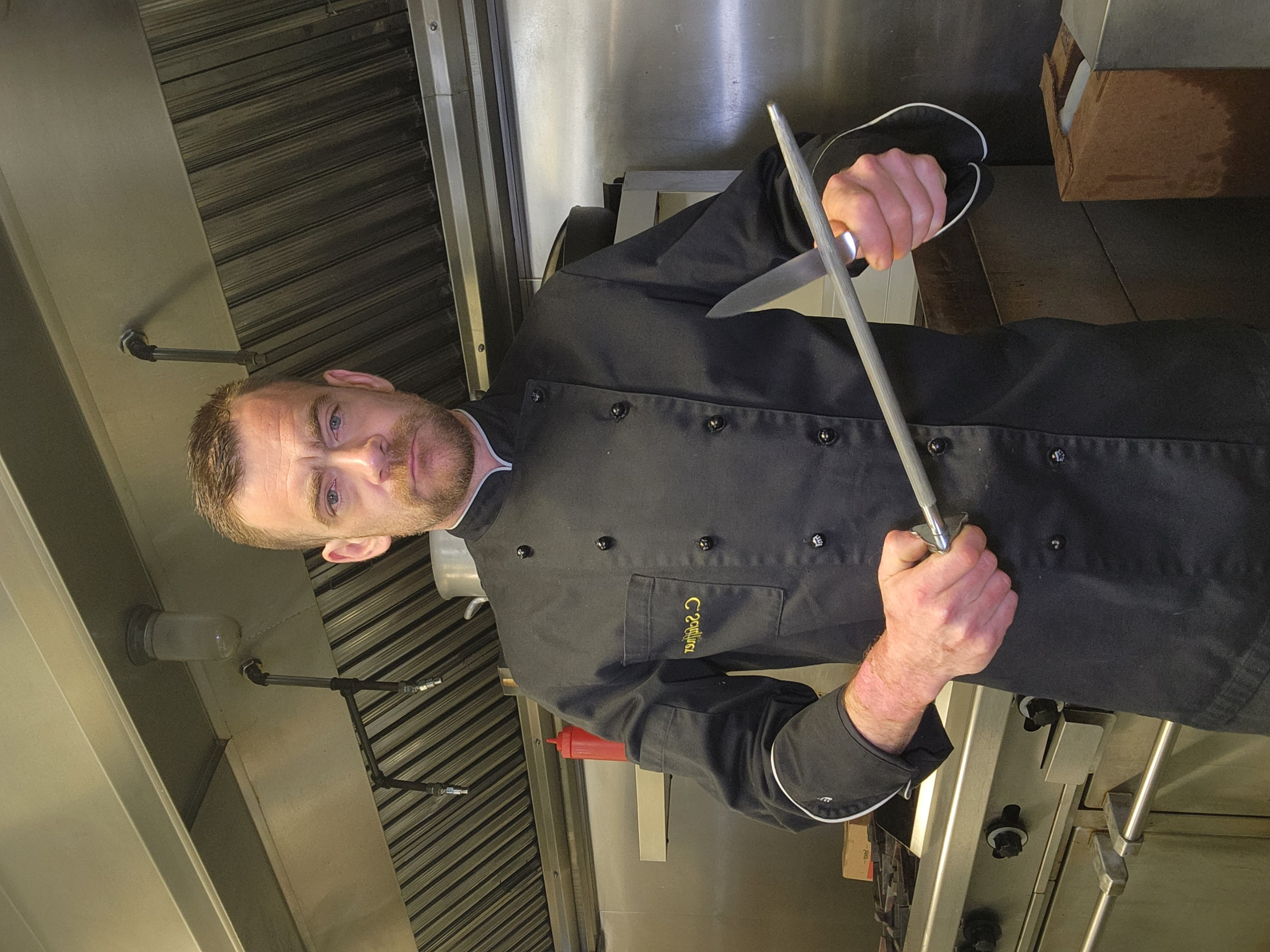
I run a restaurant in Dawson City, Yukon. Population 1,300. Seasonal tourists. Limited suppliers. Everything ships in from Whitehorse, which is already remote by most standards. Ingredients cost more. Margins are tighter. There is no room for Dogs on the menu.
When I first did a full menu engineering audit in Dawson City, I had 34 items on the menu. Felt lean for a place that did breakfast, lunch, and dinner. Turns out it was not lean enough.
The audit revealed 6 Dogs. Six items that barely sold and barely made money. They were using walk-in space, requiring ingredient orders, and adding prep time. Total contribution margin from all 6 Dogs combined: $127 per week. That is $6,600 a year from 6 items that took 18% of my menu real estate.
I also found 4 Plowhorses eating my margin. Popular items with food costs I had never recalculated after supplier prices went up. One dish — a schnitzel special — had drifted from 29% food cost to 38% over eight months. Nobody noticed because we were busy. Revenue looked fine. But every plate of that schnitzel was costing me $2.70 more than I thought. At 25 orders a week, that was $3,510 a year. From one dish.
After the audit, I cut the 6 Dogs, fixed pricing on the 4 Plowhorses, and repositioned 3 Puzzles with better descriptions and prime menu placement. Total impact in the first quarter: $14,200 in additional contribution margin. Same number of guests. Same kitchen. Same staff. Just a smarter menu.
That audit took me one afternoon. One afternoon for $14,200 a quarter. There is no investment in the restaurant business with a better return than menu engineering. Nothing comes close.
How the Stars/Plowhorses Matrix Fixes This
Menu engineering is not a one-time project. It is a quarterly discipline. Every 90 days, you pull your sales mix report, update your recipe costs, plot every item on the matrix, and take action.
Stars get protected. Plowhorses get fixed. Puzzles get promoted. Dogs get removed. Every quarter, your menu gets tighter. More profitable. More focused.
The Menu Profit Score Assessment gives you a starting point. Answer 10 questions about your current menu and get a score that tells you how much margin you are probably leaving behind. It takes 5 minutes and it is free. Most operators who take it discover they have at least 3 Plowhorses dragging down their menu and at least 2 Puzzles they should be promoting.
You spent months building your menu. Spend one afternoon engineering it. The math will surprise you. And the money you find will change what you think is possible in your restaurant.
Frequently Asked Questions
How many items should a restaurant menu have?
Most restaurants should have 7 items or fewer per category. Research on choice architecture shows that when guests see more than 7 options in a single category, decision fatigue kicks in. They default to something safe and cheap — usually a Plowhorse with low margin. A 40-item menu is not offering variety. It is creating confusion, slowing your kitchen, increasing waste, and pushing guests toward your worst-margin dishes. Cut to 24-35 total items across all categories and watch average check go up.
What is a Star menu item?
A Star is a menu item that is both highly profitable and highly popular. It has above-average contribution margin (the dollars left after food cost) and above-average sales volume. Stars are your best performers. They make you money and guests love them. Your job with Stars is simple: protect them. Do not change the recipe. Give them prime placement — top right of the menu, first item in a category, featured on table tents and specials boards.
How often should I re-engineer my menu?
Re-engineer your menu at least quarterly, and do a full deep audit twice a year. Ingredient costs change seasonally. Guest preferences shift. New items need evaluation after 60-90 days of sales data. A quarterly review takes 2-3 hours: pull your POS mix report, update recipe costs, reclassify items into the matrix, and make adjustments. Restaurants that re-engineer quarterly typically see 8-15% higher profit margins than those that set their menu once a year.