Restaurant prime cost is your total cost of goods sold (food plus beverage) added to your total labour cost (wages, payroll taxes, and benefits). It is calculated as: Prime Cost = COGS + Total Labour. For a full-service independent, the general benchmark is 60–65% of total sales. This is the number you actually control — and the one most operators are not tracking.
Most operators I talk to know their food cost. They watch it weekly. Some of them watch it obsessively. And they still wonder why the money is not there at the end of the month.
Here is the problem. Food cost is a partial number. It tells you what you spent on ingredients. It does not tell you what you spent on the hands that cooked them, portioned them, plated them, and sent them out. A dish can look perfectly costed on a spreadsheet and still bleed you dry if the labour required to produce it is high.
Prime cost catches both. That is why it matters more.
The Formula — No Shortcuts
Prime Cost Formula
Prime Cost = COGS (Food Cost + Beverage Cost) + Total Labour CostCOGS — Every dollar spent on food and beverage inventory consumed in the period. Raw ingredients, bar stock, coffee, condiments. Everything that goes into what you serve.
Total Labour — Every dollar spent on people. Hourly kitchen staff, hourly front-of-house, salaried managers, owner draws taken as wages, payroll taxes, and any benefits you cover. If a person costs you money to have them there, it goes in.
Prime Cost % = (Prime Cost / Total Sales) x 100General benchmark for full-service independents: 60–65% of sales. Below 60% is strong. Above 65% and you are running out of margin to cover rent, utilities, and anything else before profit.
That is the whole calculation. Two line items. Add them. Divide by sales. The reason most operators do not do it is not that it is complicated — it is that getting accurate labour numbers takes discipline. Payroll taxes and benefits are easy to forget. Owner wages are easy to avoid. Both distort the number if you leave them out.
Do not leave them out.
Why Food Cost Alone Will Lie to You
Let me give you a concrete example of why watching food cost alone is not enough.
Say you run a brunch concept. Your food cost is sitting at a respectable 30%. You feel good about that. But your kitchen requires two cooks to execute a single eggs Benedict station — one for the poach, one for the hollandaise and plate. Your labour to produce one cover on a table of two is significant. That eggs Benedict with a 30% food cost might be costing you 48% in combined food and labour before the dish even hits the pass.
That is prime cost doing its job. It catches the gap food cost misses.
Equally, a restaurant can have a 28% food cost and still be unprofitable because labour is running at 42%. Prime cost exposes that combined pressure immediately. Food cost at 28% looks fine in isolation. Prime cost at 70% is a crisis.
The two costs move in relation to each other. That is the point. You need to see them together.
What the Grumpy Schnitzel Season Proved
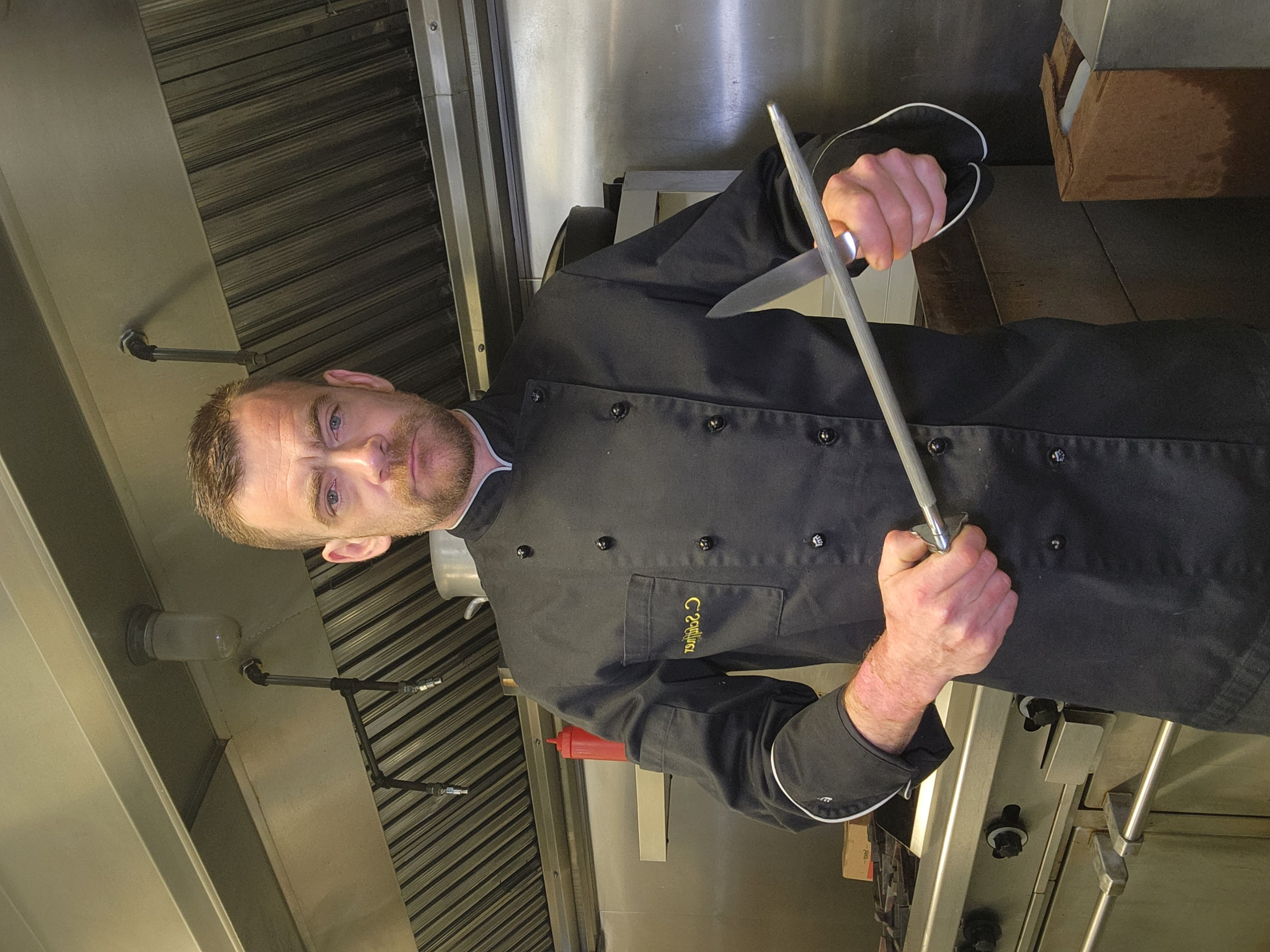
When I ran Grumpy Schnitzel in Dawson City — a seasonal concept that ran through the Yukon summer — the prime cost numbers across the season told a story that food cost alone never could have.
In May, we were getting the operation off the ground. Volumes were modest. Labour was proportionally heavy because you need the team in place before the tourists arrive — you cannot ramp staff in the Yukon on short notice. Sales had not caught up to the labour base yet.
Grumpy Schnitzel — Verified Season Numbers
May (ramp-up): Food cost 36% — Prime cost 53.4%
July (peak volume): Food cost 28% — Prime cost 39.2%
Season blended: Food cost 33.7% — Prime cost 47.9%
Operating margin at peak: ~39%
Sales nearly doubled from May to August. Prime cost fell 14 percentage points as volume rose. The labour base was fixed. The food systems held. More sales through the same structure meant the cost percentages compressed.
What those numbers show is something operators get wrong constantly. They assume that getting busier automatically means getting more profitable. It does — but only if the systems hold. If your prep sheets are not tight, if your portion control breaks down under volume, if you start putting on extra staff reactively instead of running leaner with better processes, prime cost goes up as you get busier. Not down.
The Grumpy Schnitzel prime cost fell under volume because the systems were set before the rush. Portioning was decided in advance. Labour was scheduled against projected covers, not reactive. When sales doubled, prime cost fell because the structure absorbed the volume without proportional cost growth.
That is the prize. And you cannot see it without tracking prime cost.
How to Calculate Prime Cost Weekly
Weekly tracking is the standard. Monthly is too slow — by the time you see a problem, you have already lost four weeks of margin. Here is the process:
- Pull your COGS for the week. Opening inventory plus purchases minus closing inventory. Every category: food, beverage, dry goods, bar stock. Be honest about waste and comps — they are real costs.
- Pull your total labour for the week. Every hour worked by every person in your building, at their actual rate. Add employer payroll taxes — in Canada that means CPP and EI contributions. Add any benefits you cover. If you are taking a salary, include it.
- Add COGS plus total labour. That is your prime cost dollar figure for the week.
- Divide by total sales for the week. Multiply by 100. That is your prime cost percentage.
- Compare to your target. If you are running a full-service independent, the general benchmark is 60–65%. If you are above 65%, something in either COGS or labour needs attention — or both.
The Operator's Toolkit includes a prime cost tracker built for exactly this workflow — weekly inputs, automatic percentage calculation, and a running view across weeks so you can see the trend. It is the same structure I used at Grumpy Schnitzel.
| Week | Sales | COGS | Labour | Prime Cost | Prime Cost % |
|---|---|---|---|---|---|
| Week 1 | $22,000 | $7,480 | $7,040 | $14,520 | 66.0% |
| Week 2 | $24,500 | $7,840 | $7,105 | $14,945 | 61.0% |
| Week 3 | $27,000 | $8,370 | $7,290 | $15,660 | 58.0% |
| Week 4 | $29,000 | $8,700 | $7,540 | $16,240 | 56.0% |
Read that table. Same labour base, growing sales, prime cost percentage dropping week over week. That is what controlled growth looks like in the numbers. The operator in Week 1 has a problem — 66% prime cost with rent still to pay. The same operator in Week 4 has breathing room. The difference is volume through a stable cost structure, not luck.
Where Operators Get the Number Wrong
Three common errors that make your prime cost look better than it is — and leave you wondering why reality does not match the spreadsheet.
1. Excluding Payroll Taxes and Benefits
Your wages are not your labour cost. Your total labour cost is wages plus the employer portion of payroll taxes plus any benefits you fund. In Canada, that means CPP and EI contributions on top of gross wages. These are real dollars out the door. Leaving them out understates your prime cost by several percentage points. You will feel better looking at the number. You will feel worse at the bank.
2. Not Counting Owner Labour
If you are working in your own kitchen and not counting that labour in your prime cost, your prime cost is wrong. You are a real cost. The question is whether the business can sustain what you would have to pay someone else to do what you do. If your prime cost only looks healthy because you are not paying yourself, you do not have a healthy prime cost — you have hidden labour.
3. Using Invoices Instead of Actual Usage
COGS is not what you bought. It is what you used. That means you need to take actual inventory counts — beginning and ending — to calculate true consumption. Operators who skip inventory counts and just use purchase invoices systematically undercount their food cost. Their prime cost looks low. Their actual food cost is higher. They are making decisions on a fiction.
If your prime cost number never changes much week to week, it is probably not being calculated correctly. Real operations have variance. Real prime cost moves.
What to Do When Prime Cost Is Too High
Above 65% is a signal, not a sentence. The diagnosis matters more than the number itself. When prime cost is high, the first question is which side is driving it — COGS or labour.
High COGS with acceptable labour: look at your menu mix, your portion standards, and your waste. A contribution margin analysis often reveals that your bestselling items are also your worst margin items. Fixing that alone can drop COGS two to four points.
High labour with acceptable COGS: look at your scheduling model. Are you staffing to covers or to habit? Do your prep sheets tell your kitchen team exactly how much to produce, or are they cooking to instinct? Labour waste is often invisible because it looks like people working — just on the wrong things, in the wrong amounts, at the wrong times.
Both high: you likely have a volume problem compounding a systems problem. More volume through a broken system accelerates the bleed. Fix the systems first. Use the free Profit Leak Calculator to find which category is your biggest leak before you start pulling levers.
"Food cost felt like a win. Prime cost told the truth. The gap between the two was where the money was disappearing."
Prime cost is not complicated. It is just disciplined. Pull the number weekly. Compare it to your target. When it moves, understand why before you react. That habit — more than any single fix — is what separates operators who stay in business from operators who wonder what happened.
Frequently Asked Questions
What Is a Good Prime Cost Percentage for a Restaurant?
For a full-service independent restaurant, a commonly cited benchmark is 60–65% of total sales. Below 60% is strong. Above 65% means your combined food, beverage, and labour costs are eating too much of your revenue and you likely have little left for rent, utilities, and profit. That said, benchmarks are a starting point — your concept, service model, and sales volume all affect what is achievable. Track it weekly. The trend matters more than any single number.
What Is Included in Restaurant Prime Cost?
Prime cost includes two things: your total cost of goods sold (COGS) — that is food cost plus beverage cost — and your total labour cost. Total labour means every dollar you spend on people: hourly wages, salaried management, payroll taxes, and benefits. Nothing else goes into prime cost. Rent, utilities, insurance, and marketing are operating expenses and belong in a separate category.
Why Is Prime Cost More Important Than Food Cost Alone?
Because food cost only tells you half the story. A dish can have a great food cost percentage and still bleed you dry if the labour required to produce it is high. Prime cost catches both. A restaurant can have a 28% food cost and still be unprofitable because labour is running at 42%. Prime cost exposes that combined pressure. Food cost alone lets you feel good about a partial number while the full picture is a loss.