When a restaurant supplier price increase hits, the first reflex is to raise menu prices. That reflex is usually wrong. Raising prices drops covers, and your fixed costs don't drop with them. The real move is to re-cost every affected dish, use cross-utilization to spread expensive ingredients across more menu items, and consolidate spend with fewer distributors to recover negotiating power — find the margin inside the plate before you push it onto the guest.
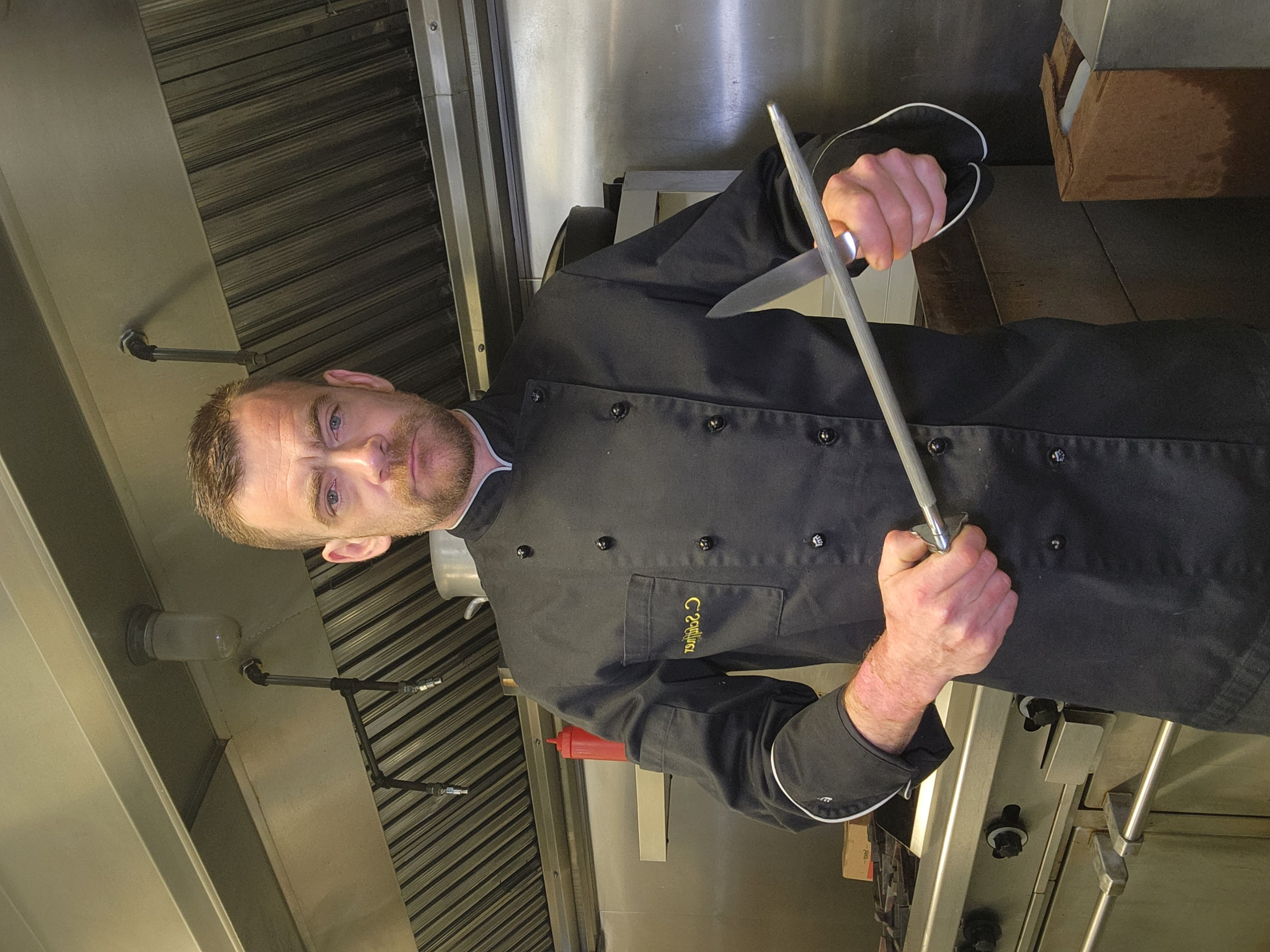
A truck comes twice a week to Dawson City, Yukon. Sometimes it doesn't come at all. Supply chain disruptions are not a news headline here — they're Tuesday. When I ran Grumpy Schnitzel in a town of roughly 1,300 people, I couldn't call three distributors and play them against each other. My options were limited by geography in ways that most operators in a city never have to think about. That pressure taught me something: the margin is almost always still in the plate. You just have to go find it.
Most operators don't. They see the invoice climb, they pick up the phone, they raise prices, and they hope the guests don't notice. Some guests don't. Some do. And some of them quietly stop coming as often. Covers slip. Revenue follows. But the lease is the same. The labor is the same. Suddenly you're running harder for less money, and the next supplier increase hits you in a worse position than the last one.
That's the death spiral. It doesn't announce itself. It just tightens, slowly, until you're staring at a monthly P&L that doesn't add up and you can't figure out when it started.
Step One: Re-Cost Before You React
The first thing you do when a supplier line jumps is pull your recipe cards and re-cost the affected dishes. Not the whole menu — just the dishes that use the ingredient that moved. You're looking for two numbers: the new food cost percentage for each dish, and whether any dish has crossed above 35%.
A dish at 28% food cost that jumps to 31% after a price increase is uncomfortable. A dish at 29% that jumps to 36% is a problem that needs immediate attention. Those are not the same conversation, and treating them the same wastes your time.
Sort your affected dishes by severity of the swing, not by the raw dollar increase on the invoice. A $0.40 per-portion increase on a $6 ingredient cost on a $16 dish hurts more than a $1.20 increase on a $30 ingredient cost on a $48 dish. The math matters more than the invoice line item.
If you don't have recipe cards with accurate per-portion costs, that is your actual problem — and it existed before the supplier increase. The increase just made it visible. You cannot manage what you cannot measure, and you cannot measure a dish you've never properly costed.
Step Two: Cross-Utilization Before Substitution
The next move most operators don't make is cross-utilization. If the ingredient that jumped in price is used in only one or two dishes, every cent of that increase lands entirely on those dishes. If that same ingredient is used across six dishes — including two high-volume sellers — your per-dish exposure drops, and your total purchase volume of that ingredient may be enough to negotiate differently with your supplier.
This is what "buy to the menu, not to the shelf" means in practice. When I was running the Grumpy Schnitzel kitchen, pork loin was the hero ingredient. I couldn't reduce what I paid for it — freight up the highway to Dawson City meant the distributor price was already elevated. So I made sure that pork loin appeared across the menu in ways that justified the volume I was buying. Schnitzel, obviously. But also a weekday special, a staff meal rotation, and a prep component in something else. Every portion of that loin had a job. Nothing sat on a shelf costing me money while it waited.
Cross-utilization does two things: it spreads the cost of an expensive ingredient across more revenue-generating plates, and it reduces waste — which is its own food cost problem sitting quietly on top of your supplier cost problem. Industry data puts pre-plate food waste at 4–10% of purchased food. On a $1M revenue operation, that's $30,000 to $75,000 a year leaving through the back door before a single guest is served.
Step Three: Consolidate Spend and Negotiate Volume
Distributors move on volume. That's the mechanic. A restaurant spending $12,000 a month with one broadliner gets a different conversation than one spending $4,000 each with three. If you're split across multiple distributors without a deliberate reason for each split, you may be buying the flexibility of redundancy at the cost of your negotiating position.
When I was sourcing in Dawson City, I made a deliberate choice to consolidate the bulk of my volume with one distributor — the one who could actually deliver reliably given the geography. Because I was giving that distributor a larger share of my total spend, I had the standing to ask for better pricing holds on the items I ordered most. I wasn't the biggest account they had. But I was a loyal, predictable, high-concentration account. That's a different kind of leverage.
"Buy to the menu, not to the shelf. Every ingredient you order should have a job waiting for it."
At the same time, I bought pork loin locally from the town butcher instead of paying freight up the highway for it. That wasn't sentiment — it was math. The local price, even without the distributor volume discount, beat the delivered price once freight was factored in. For your hero ingredient, always check whether a local or regional source changes the calculus. Not for everything. For that one thing that moves your food cost the most.
The Three-Move Response to a Supplier Price Increase
1. Re-cost. Pull recipe cards for every affected dish. Sort by percentage swing, not invoice dollars. Flag anything that crosses 35% food cost for immediate re-engineering.
2. Cross-utilize. Before you cut the ingredient, ask: can it work in more dishes? Spreading usage across more plates reduces per-dish exposure and may justify higher volume with your supplier.
3. Consolidate. Concentrate spend with fewer distributors to earn volume-based pricing. Check local sources for hero ingredients where freight is a significant cost driver.
When Portion Adjustment Is the Right Tool
Portion adjustment gets a bad reputation because operators do it wrong. They quietly shrink the protein by 10% and hope the guest doesn't notice. The guest notices. Or they over-adjust and the dish stops selling because it looks like a bad value at the same price.
Done correctly, portion adjustment is a precision tool. You're not cutting the portion — you're re-engineering the plate composition. You may reduce the protein by a small amount while increasing a higher-margin accompaniment. The plate still feels full. The visual value is maintained. The food cost lands where you need it. This is menu engineering, not shortchanging.
The test is simple: put the re-engineered plate in front of someone who orders it regularly and watch their reaction when the plate lands. If they say nothing, you succeeded. If they ask what happened to the chicken, you over-adjusted.
At Grumpy Schnitzel, when food cost in May was running at 36%, I didn't raise prices. I went through the menu systematically — dish by dish — and looked at where the cost was coming from. By July, food cost was at 28%. The menu got tighter, not looser. Sales nearly doubled from May to August. The margin improvement came from inside the operation, not from pushing it onto guests.
Price Increases as a Last Resort, Not a First Move
There are times when a price increase is the right answer. If your entire cost structure has shifted — multiple supplier lines up, labor cost climbing simultaneously, utilities moving — and you've already done the re-costing and cross-utilization work, then a targeted price adjustment on specific high-exposure dishes may be warranted.
The key word is targeted. You're not doing a 5% menu-wide increase. You're identifying the three or four dishes where the food cost math no longer works and adjusting those specific items. A $1–$2 increase on a high-demand dish is rarely noticed. A 5% menu-wide price jump is noticed immediately and remembered.
And if you're going to raise a price, do it on dishes where your contribution margin is already strong — where you're building from a position of strength, not desperation. A $28 dish with a $6 food cost can absorb a $1 increase more gracefully than a $16 dish with a $5 food cost that just got squeezed further.
If you're not sure which dishes fall into which category, or if you want to find where the real leaks are before your next supplier invoice lands, the Profit Leak Calculator covers nine cost categories in about five minutes. It won't tell you everything, but it will show you where to look first.
And if you need someone to work through the dish-by-dish re-costing and cross-utilization with you in a structured way, the $3,500 Profit Recovery Engagement is built exactly for that: 21 days, diagnostic through install, finding the margin that's already in your operation before we talk about anything else.
The Discipline That Separates Operators Who Survive From Those Who Don't
The operators who handle supplier price increases without going into a spiral are not lucky. They're not in better markets. They're not paying less than you.
They have recipe cards. They re-cost when prices move. They know their contribution margin by dish, not just their food cost percentage. They've already mapped cross-utilization into their menu design, so when one ingredient jumps, it's not a crisis — it's a re-pricing exercise on a few items.
That infrastructure is not glamorous. It doesn't show up on Instagram. But it's the difference between a 5% price increase breaking your cover count and a 5% supplier increase being a Tuesday afternoon of re-costing work.
Remote kitchens teach this faster than city kitchens, because you don't have the luxury of solving supply problems with more options. You solve them with better systems. That lesson translates anywhere.
Frequently Asked Questions
Should I raise menu prices when my supplier prices go up?
Not automatically. Raising prices is the first reflex and often the wrong one. Every price increase you pass to the guest risks dropping cover count, and your fixed costs don't drop with covers. Before raising prices, re-cost every affected dish, audit which items can absorb the increase through portion or recipe adjustments, and look for cross-utilization opportunities that reduce your total ingredient spend. Raise prices only after you've exhausted what you can recover inside the plate.
What is supplier consolidation and how does it help restaurants?
Supplier consolidation means concentrating your spend with fewer distributors so your total volume with each one is large enough to negotiate better pricing or pricing holds. If you currently split orders across three broadliners, consolidating to one or two increases your leverage. Distributors move on volume. A restaurant spending $12,000 a month with one supplier gets a different conversation than one spending $4,000 each with three. Consolidation does not mean limiting to one source for every item — keep local or specialty relationships where freight or quality justify it.
How do I find which menu items are being hit hardest by supplier price increases?
Pull your recipe cards for every dish and re-cost them using the new supplier prices. Sort by the change in food cost percentage, not just the dollar change. A $0.40 increase on a $6 ingredient cost on a $16 dish matters more than a $1.20 increase on a $30 ingredient cost on a $48 dish. Look for dishes where the increase pushes food cost above 35% — those are your urgent re-engineering targets. If you don't have recipe cards with accurate per-portion costs, that's your actual problem — and the Profit Leak Calculator can help you find where the biggest gaps are.