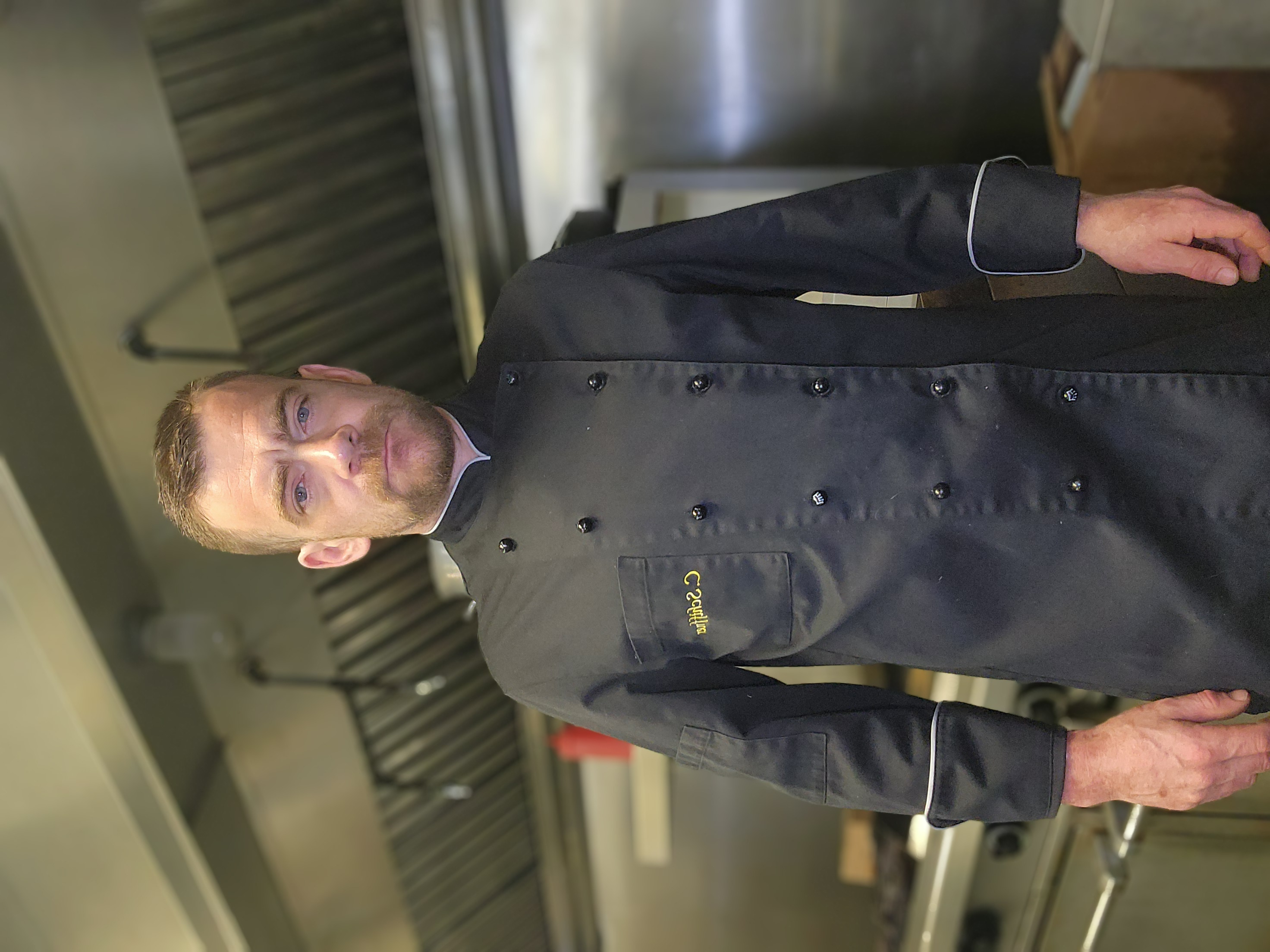
In 2015 I worked a Canadian restaurant with a line partner I'd cook next to for three seasons. We ran it hot. Friday and Saturday nights came in like weather you could feel an hour before it hit. Mise en place was loaded by five. By seven we were in the rush, every ticket landing clean, every plate going up the pass without a word between us. The dopamine of a kitchen that's clicking is real. It's the closest thing to legal addiction I've ever felt.
He felt it too. Maybe more than me.
After season three he told me he was done. Not done with that kitchen. Done with cooking. He took off to open a hotel — front of house only. He never put on an apron again. I lost the best cook I'd ever worked with. The owners lost a chef they couldn't replace.
That's the question I want to answer: why does this keep happening to the best chefs in the building?
What was actually broken
The owners called it burnout. It wasn't burnout. It was a single-point-of-failure dressed up as a great team.
Most operators read this and nod, but they don't actually believe it applies to their kitchen. They think: my chef is great, my team is tight, we run a clean operation. All of that can be true. None of it changes the math. If two people carry every Friday and Saturday, you're one walkout away from a half-empty schedule.
The lie the industry tells is that a great chef is the answer. They're not the answer. They're the dependency. The longer they stay great in your building, the more your operation calcifies around them. By year three they're not just running the line. They're the system. And when the system is a person, the system has bad weekends, sick kids, hangovers, and a breaking point.
The breaking point looks like burnout because that's the visible part. Underneath it is a question the operator never asked: who else can run a Saturday at 280 covers if my best chef can't?
What it actually costs you
Replacing a senior cook is expensive on its own — recruiting, signing, training, and the inevitable service degradation while the new person ramps. For a head chef or senior sous it runs into five figures fast. But that's not where the real damage is.
The real cost is the lost season. When my line partner walked, the restaurant didn't fail — but it didn't grow either. The schedule had to be cut back. Specials simplified. Banquet bookings turned down because nobody could cover them. That's the invisible tax of single-point-of-failure: not the day the chef leaves, but the year that follows where you can't operate at the level you'd hit before.
If you're netting 3-5% on a $1.5M restaurant, losing one season of growth potential is easily $80,000 to $120,000 in compounding revenue you don't get back.
The system that stops it
The fix isn't hiring a second great chef. It's making sure the operation doesn't require one.
- Pick a Saturday. Step off the line. Once a month, your best chef does not run the pass. Someone else does. You watch. If it falls apart, you've found exactly where to start training. If it doesn't, you've discovered something more important — your top chef is not the only person who can carry a night.
- Document the three things your top chef does that nobody else can. Plating standards, station setup, expo rhythm — pick the three that would break first if they called in sick. Write them down. Train them out of your chef's head and into the team's hands.
- Build a rotation, not a hero. The best operators I work with run two people who can each anchor a Saturday alone. That's not luxury staffing. It's insurance against the season-ending walkout.
- Schedule the recovery. If your top chef works 14-hour Fridays and Saturdays, they need at least one full disconnected day a week. Not "on call." Not "checking texts." Actually off. The chefs who last decades in this industry are the ones whose owners protected them from the rush, not the ones who chased it hardest.
- Read the early signals. A great chef doesn't quit on a Tuesday. They quit on a Sunday morning after three months of small signals — short answers in the prep meeting, leaving on time instead of staying late, not laughing at the same jokes. The day they actually tell you is the day after they already decided.
This isn't a full SOP. It's the starting frame. The first Saturday off the line is the cheapest diagnostic you'll run all year.
Where most operators stop
Most operators read this and say: "I can't take a Saturday off the line. We're too busy. My chef won't let me. The team isn't ready."
All three of those are the same answer: you've already built the dependency. The exact reasons you can't run the test are the exact reasons you need to. Every month you wait, the dependency gets deeper and the eventual walkout costs more.
The chefs who lasted in my career weren't the ones who loved the rush most. They were the ones who learned to step out of it.
Start here
If you want to see exactly where your restaurant is bleeding — including how much you're losing to staff dependency, schedule fragility, and skill-concentration risk — run the 90-second Profit Leak Calculator. It's free and you don't need to give an email until you see your number.
The chef you can't replace is the one you never trained to leave.
Frequently Asked Questions
Why do my best chefs always burn out?
Because the restaurant runs through them. When one or two people carry the night, every great service is also a slow burnout, and the most committed cook is usually the first to walk. It's not weakness — it's a single-point-of-failure problem dressed up as a great team.
What's the difference between burnout and a system failure?
Burnout is what the owner calls it after the chef quits. A system failure is what was happening for months before — no rotation, no scheduled recovery, no second person trained to carry a Saturday. The chef hitting the wall is the symptom. The single dependency is the disease.
How do I stop being dependent on one chef?
Pick one Saturday this month, step off the line, and put someone else on expo. Watch the night happen without you or your top chef. If it falls apart, you've found exactly where to start training. If it doesn't, you've discovered you can take a Sunday off without the place burning down.