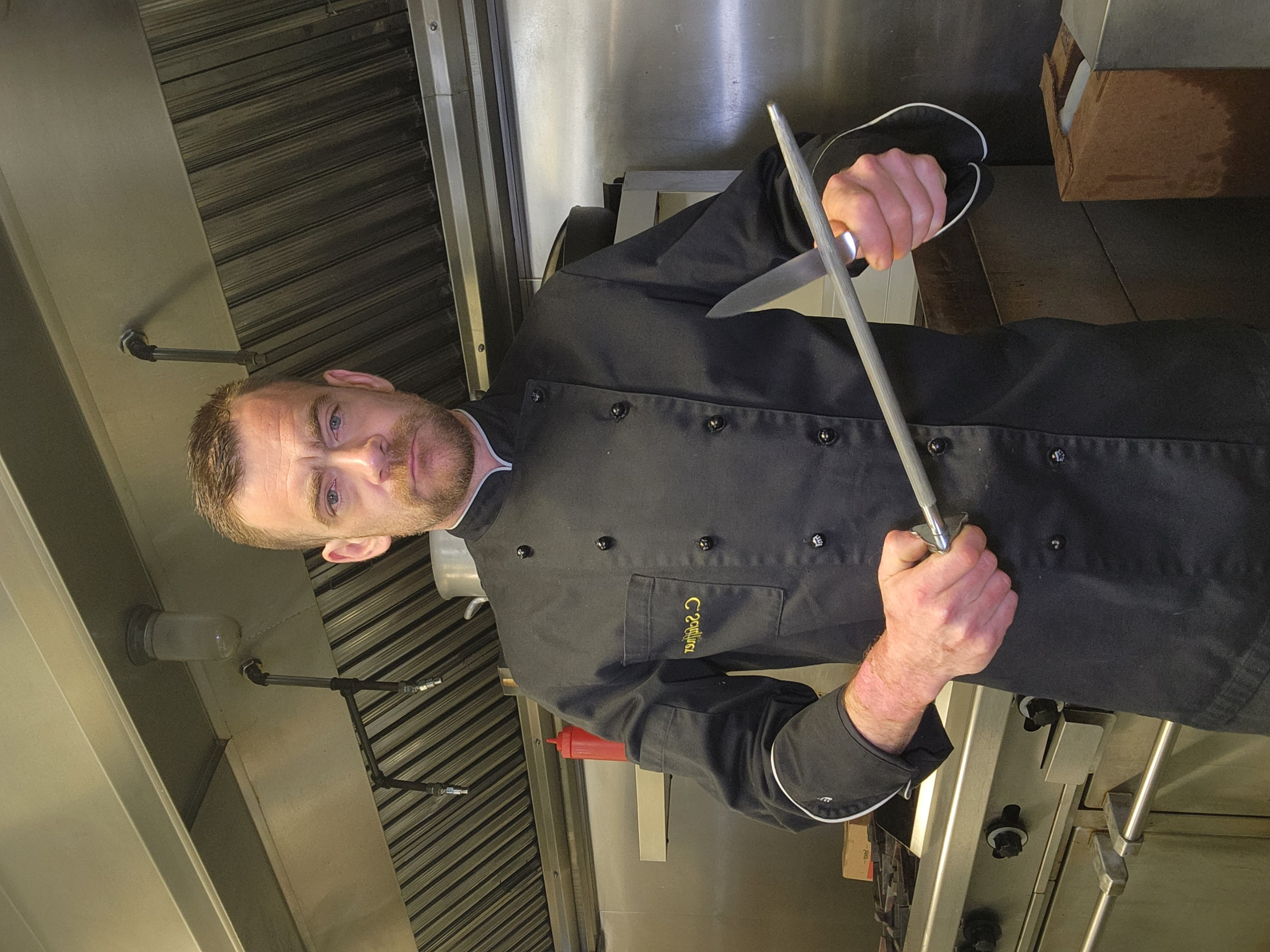
Only open a second restaurant location when Location 1 runs profitably without you on the floor, prime cost sits consistently below 60%, and you have three months of operating cash in reserve. Revenue growth is not the signal. Clean margin is. A second location does not fix a leaky first location — it doubles the leak at twice the overhead.
That is the short answer. Here is the longer one, and it cost me $370,000 to learn it.
The Story Behind This Checklist
In 2019, I bought Klondike Kate's in Dawson City, Yukon. A bigger room. More seats. A real tourist draw. My first operation — the Grumpy Schnitzel — was doing well enough that expansion felt like the logical move. Revenue was up, guests were happy, and the opportunity was sitting in front of me.
What I did not do was run a clean diagnostic on Location 1 before signing anything for Location 2. I expanded on optimism. I looked at revenue and convinced myself the model was working. I did not pull a hard per-plate margin read. I did not stress-test what would happen if one full season disappeared.
Then COVID erased the 2020 and 2021 tourist seasons. Dawson City in a pandemic is not a city. It is a very remote, very quiet outpost with no visitors and no revenue. Klondike Kate's had no reserves to survive a dead season — let alone two. I walked away in September 2022. The loss was $370,000.
Meanwhile, the Grumpy Schnitzel survived. It was lean. Food cost held around 34% blended across the season. Prime cost sat around 48%. It was built tight. When everything went sideways, it had the margin to absorb the hit. The second location had none of that.
That is the difference between a restaurant built for growth and a restaurant that looks like growth from the outside.
What Most Operators Get Wrong About Expansion
Most operators think expansion risk lives in the build — the new lease, the kitchen equipment, the hiring push, the grand opening. Those are real costs. But they are visible costs. You can see them coming.
The dangerous part of opening a second restaurant location is not the build. It is replication.
Whatever Location 1 quietly leaks — portion drift, waste that nobody tracks, a labor schedule that runs two people over on slow nights, a menu with three items that cost more to produce than they return — all of that comes with you to Location 2. Now you are running the same margin problem in two kitchens with half the management attention on each one.
Most operators expand on revenue optimism. They see strong sales and assume the model is working. But revenue and margin are two different things. A restaurant doing $2M a year with a 22% net food cost problem is bleeding $44,000 annually that never shows up on the top line. Open a second location, and that number does not stay flat. It compounds — because now you have twice the purchasing, twice the prep, and a management team stretched too thin to catch the drift.
"A second location doesn't fix a leaky first location. It doubles the leak."
Before you open a second restaurant location, you need to know exactly where Location 1 stands. Not roughly. Exactly. That means a real per-plate read — start with this free Readiness Scorecard to see if your first location is actually expansion-ready.
The Pre-Expansion Checklist: 6 Gates Before You Sign
These are not nice-to-haves. They are gates. If you cannot clear all six, you are not ready. Expanding anyway is a choice to carry your current problems at 2x scale.
Gate 1: Prime Cost Below 60%
Prime cost — food cost plus labor cost as a percentage of revenue — is the number that tells you whether a restaurant is actually profitable or just busy. The industry benchmark for full-service independent operations is 55–60%. If you are running above 60% and expanding, you are compressing your margin further at every location.
At the Grumpy Schnitzel, prime cost sat around 48%. That was not an accident. That was tight purchasing, tight scheduling, and a menu engineered around contribution margin rather than just ticket price. It is the reason that operation survived when Klondike Kate's did not.
Gate 2: Location 1 Runs Without You on the Floor
If you are the system — if things fall apart when you are not present — then Location 2 does not get a restaurant. It gets your leftovers. You cannot be in two kitchens. The moment you split your attention, Location 1 starts to drift and Location 2 never gets built properly.
Your test: take a full week away from Location 1. No texts to the floor manager. No checking the daily numbers at midnight. If the kitchen holds and the margin holds, the systems are real. If it falls apart, the systems live in your head — and that is a single point of failure you cannot afford to duplicate.
Gate 3: Three Months of Operating Cash in Reserve
Not for the new location. For both. Combined.
This is the reserve that covers payroll, rent, utilities, and food purchases for both kitchens through a season that produces zero revenue. Klondike Kate's had no such reserve. When the 2020 tourist season did not arrive, there was nothing to draw against. The location folded not because the concept was wrong — it folded because there was no runway.
Three months is the floor. If your market is seasonal and a dead season is even a remote possibility, six months is the real number.
Gate 4: Documented Systems That a New Team Can Run
If you cannot hand a new kitchen manager a binder and have them run your operation at 90% of your standard within 30 days, you do not have a replicable model. You have a personality-dependent kitchen. That does not scale.
The documentation test is simple: write down every recurring decision you make in a week. Every purchasing call. Every schedule tweak. Every prep standard. Every response to a supplier problem. If the list is long and none of it is written down anywhere, you have work to do before you open a second location. If those systems exist on paper and your team uses them, you are closer to ready.
Gate 5: A Clean Per-Plate Margin Read on Location 1's Top 10 Items
Not a blended food cost percentage. A per-plate read. You need to know, on your ten highest-volume items, exactly what each plate costs to produce and what it returns after food cost. This is the number that tells you whether you are expanding a margin engine or expanding a margin problem.
If you have never done this analysis on Location 1, do it before you look at any lease for Location 2. The items that look like winners on the menu board are not always the ones generating margin in the kitchen. Portion drift, prep waste, and recipe variance can quietly turn a profitable plate into a losing one — and you will not know until you pull the numbers.
Gate 6: A Clear Answer to "Why This Location, Why Now?"
Not "the opportunity came up." Not "the space is perfect." A real strategic answer: what market gap does this location fill, what revenue does it add to the system, and what does it cost the existing operation in management attention and cash?
Expansion driven by opportunity is reactive. Expansion driven by a clear read on margin, systems, reserves, and market fit is a decision. They look identical from the outside. The results are completely different.
If Location 1 Is Not Ready: Diagnose Before You Expand
If you ran through those six gates and hit a wall on one of them, that is not a reason to abandon expansion. It is a reason to fix Location 1 first.
The most common block is prime cost — operators know the number is too high but have not been able to identify where the bleed is coming from. The second most common is systems that live in the owner's head rather than on paper. Both are fixable. Neither is fixed by opening a second location.
The 21-Day Profit Recovery Engagement is built specifically for this — a diagnostic plus install that finds the margin leak in Location 1 and installs the systems to close it. If you are thinking about expansion but Location 1 is not clearing the gates above, that is the right starting point. Diagnose and fix Location 1's margin before you sign Location 2's lease.
The Expansion-Ready Benchmark
Prime cost consistently below 60%. Location 1 runs without you present for a full week. Three months of combined operating cash in reserve. Documented systems your team actually uses. A clean per-plate margin read on your top 10 items. A strategic reason — not an opportunistic one — for the specific location you are considering. Clear all six. Then talk to a commercial broker.
The Lean Location Wins the Crisis
Here is what the $370,000 loss taught me that no amount of industry reading would have: the location that survives a crisis is not the newest one, the biggest one, or the one with the best concept. It is the one that was lean before the crisis arrived.
Grumpy Schnitzel survived because it was engineered for margin. Every purchasing decision ran through a cost lens. The menu was built around contribution margin, not just price. Labor was scheduled tight. When revenue dropped to near zero for two seasons, the lean structure bought time that a bloated operation never would have had.
Klondike Kate's was bigger, had more seats, more overhead, and no reserves. When the tourists stopped coming, there was nothing to fall back on.
You do not build resilience at the second location. You build it at the first. Then you replicate it.
If you are not sure where Location 1 actually stands, take the free Readiness Scorecard before you move any further. It takes five minutes and gives you a clear read on whether you are expanding a healthy operation or scaling a problem.
Frequently Asked Questions
When is the right time to open a second restaurant location?
You are ready when Location 1 runs profitably without you on the floor, prime cost sits consistently below 60%, you have three months of operating cash in reserve for both locations combined, and your systems are documented well enough that a new team can run them. Revenue growth alone is not the signal. The question is whether Location 1 is profitable or just busy — those are two different restaurants.
What is the biggest mistake operators make when expanding to a second restaurant?
Expanding on revenue optimism instead of a clean per-plate read. Most operators see strong sales at Location 1 and assume the model is working. But revenue can be strong while prime cost, portion drift, and waste are quietly bleeding margin. A second location does not fix those leaks — it doubles them, because you have twice the overhead and half the management attention on each kitchen.
How much cash reserve should a restaurant have before opening a second location?
The minimum is three months of full operating costs for both locations combined — not just the new one. This covers payroll, rent, utilities, and food for both kitchens if revenue drops to zero. A dead season, a bad winter, or one unexpected closure can wipe out a kitchen with no reserves. The location that survives a crisis is the one that was lean and reserved before the crisis hit.