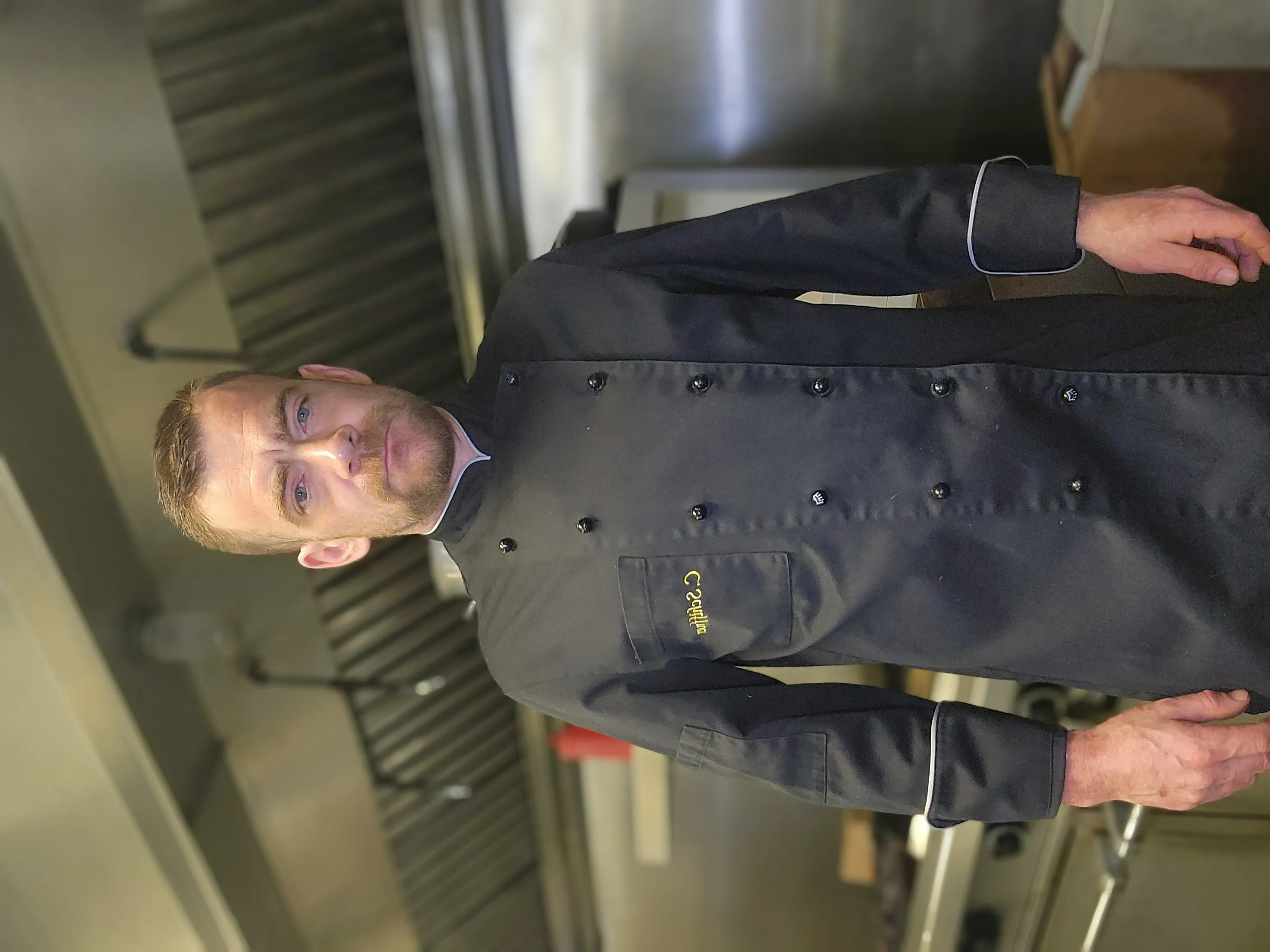
It was the fourth quiet night that May.
We had just opened Grumpy Schnitzel for another season in Dawson City, Yukon. Seven days a week, 7pm to 2am. The season here always starts the same way: one big opening weekend, then silence. The tourists haven't arrived yet. The locals already came on opening night. So you stand in your kitchen waiting for people you know aren't coming.
But you have to be there. Because it's your job.
And that's the word that hit me that night. Job.
Not business. Job.
I'd spent 22 years in kitchens. Three years as an apprentice in the Black Forest. Stations across Germany, Switzerland, Austria, Spain, and Canada. Since 2017, I'd been running my own restaurant in a town of 1,300 people, population fluctuating with the seasons, accessible by a single road that closes when it wants to.
And on that quiet Tuesday in May, staring at an empty dining room, I finally admitted the truth to myself:
I didn't have a business. I had created an expensive job for myself.
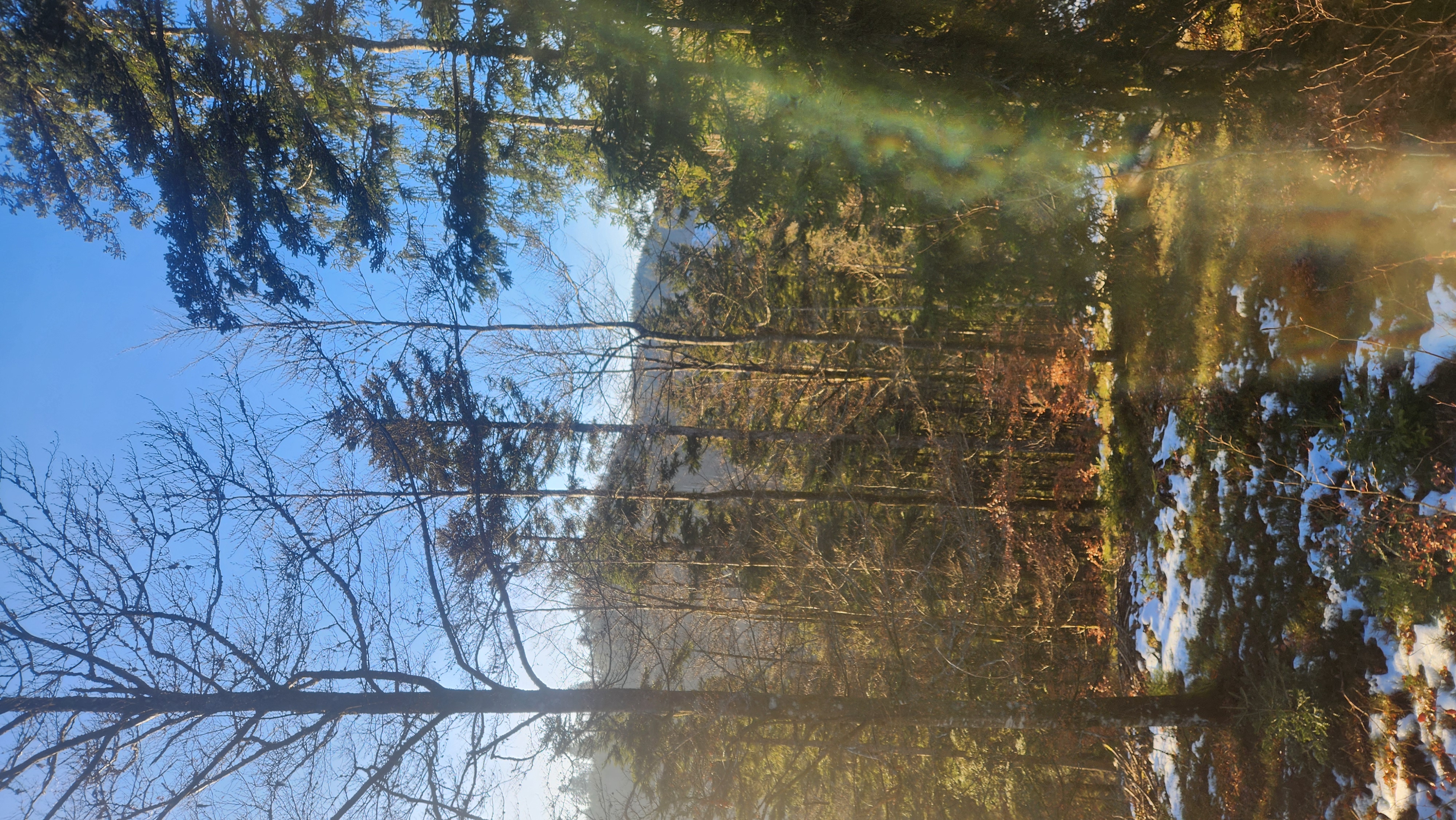
The Black Forest and the Question
After the season ended in October 2025, I flew home to Germany to visit family and old friends.
I grew up in a small village in the south of the Black Forest. The forest is a footstep away from the house. Every morning, I walked. No podcast, no phone calls. Just the trees and the path and whatever my mind needed to process.
Those walks did more for me than two years of grinding in the kitchen.
I'd already been following Daniel Priestley's work about lifestyle businesses and personal IP. The idea that your experience — the specific knowledge you've earned over decades — has value beyond trading it for hours. But I couldn't find my line. I felt lost.
Then I found Dan Koe's writing about deep thinking and meaning. About how the future belongs to people who can be signal in a world of noise. About how taste and curation matter more than output and speed. About how AI can generate infinite content, which means the only thing it can't generate is your story.
That resonated. Hard.
Because I realized I'd been approaching everything backwards. Trying to optimize the machine instead of questioning whether I should be a machine at all.
The Schedule Nobody Talks About
In the summers of 2024 and 2025, I worked 140 days straight. Around 80 hours per week. Here's what that actually looked like:
Start at 8am. Prep work. Food deliveries twice a week. Shopping runs for everything else. By 1pm, switch to the office: accounting, ordering, emails, the paperwork that never ends. Grab a short nap if I was lucky. Back in the restaurant by 6pm. Service until 2am.
Then do it again.
For 140 days.
I made decent money. But my time was capped. My health was secondary. The long walks I love? The hikes into the Yukon wilderness? Reading, thinking, taking care of myself? Non-existent. I was too busy working to build anything beyond the next dinner service.
And the worst part? During the weekdays, especially early and late season, there wasn't much going on. I was just slamming my time away. Present in the building, absent from my life.
The person who works all the time has no time to think deeply and create value.
Where It Started
In 2004, I was seventeen years old, starting my apprenticeship at Hotel Rothaus in the Black Forest — home to Germany's highest brewery. Three years of learning the craft. Half-pension buffets, a la carte service, handling bus groups of 50 people arriving all at once.
Germany has what's called the dual system — Berufsschule. You spend most of your apprenticeship working in the business, and twelve weeks a year in a specialized trade school. You learn by doing, not by watching. Theory backs up practice, not the other way around.
What they also taught us, without ever saying it directly, was that long hours are just how it is. Hospitality means sacrifice. If you're not exhausted, you're not working hard enough. Sixty-hour weeks? Normal. Eighty? Dedicated. It was a badge of honor.
I carried that belief for two decades.
The Expensive Job Trap
Here's what nobody tells you when you open your own restaurant: owning the business doesn't mean you stop being the employee.
When you're the one doing the prep, running the service, closing the kitchen, doing the books, placing the orders, and solving every problem — you haven't built a business. You've built a job that costs you everything to maintain.
The revenue looks fine. Maybe even good. But pull yourself out of the equation and what's left?
Nothing. It stops.
That's not a business. That's you, selling your hours for money. The same thing you did as an apprentice, except now you also carry the risk, the debt, and the sleepless nights.
I used to think working 80 hours a week was a flex.
It isn't. It's a trap.
The First System That Gave Me Time Back
For the 2025 season, I did one thing differently.
Before we opened, I wrote SOPs for the entire menu. Every dish. How I wanted it prepped, plated, and served. Step by step. No room for interpretation, no need for me to be standing over someone's shoulder explaining it for the hundredth time.
Then I hired an employee to start at 5pm instead of me.
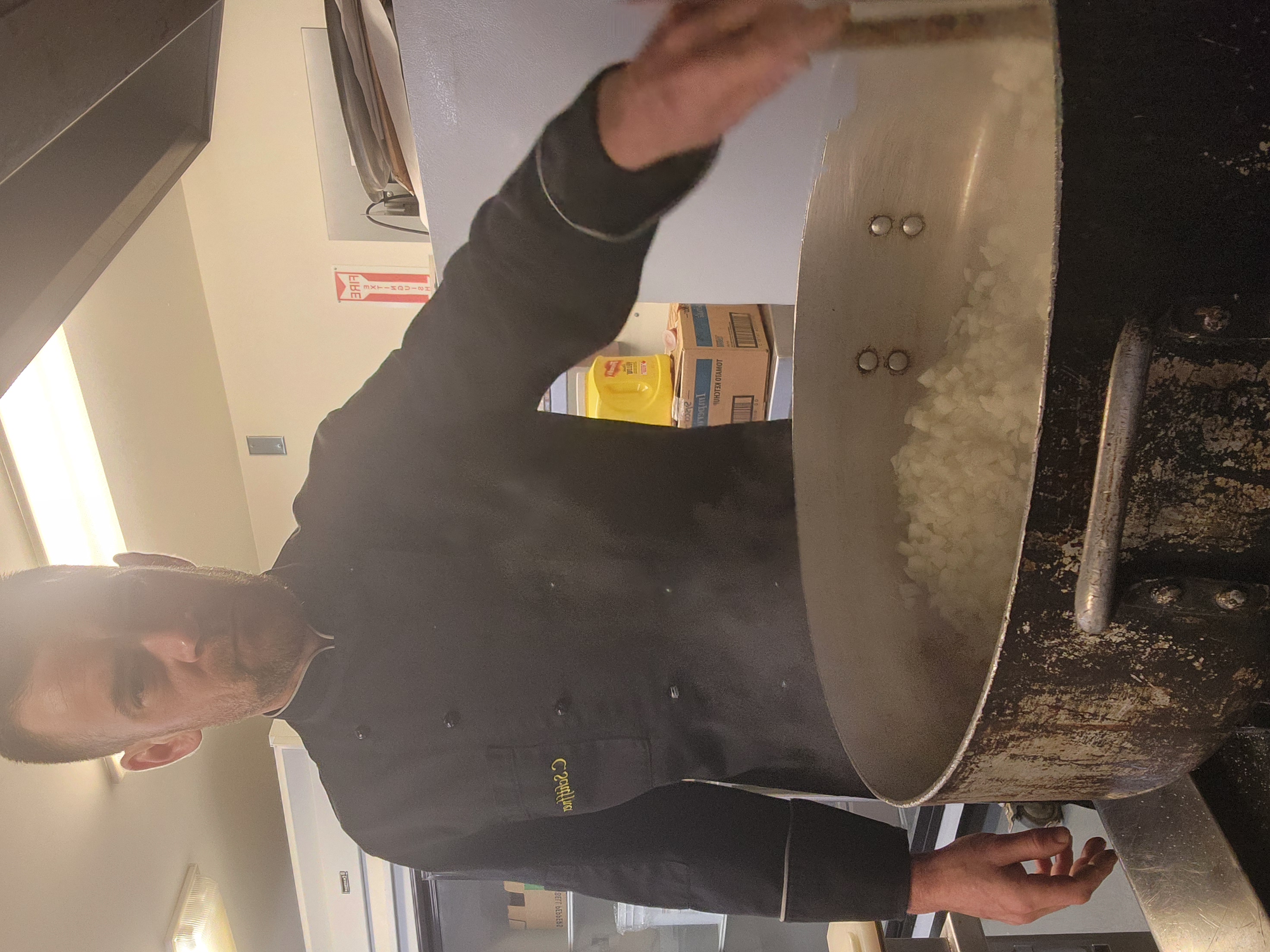
One hour per day. That's all it was. One hour earlier that someone else handled the opening prep. Over the 145-day season, that was 145 hours I got back. Time I could spend thinking instead of chopping.
It wasn't freedom. I was still there until 2am most nights. But it was the first crack in the wall. The first proof that systems, even small ones, buy back something more valuable than money. The hard truth is that most operators abandon these systems before they compound — if that sounds familiar, read about why restaurant systems fail and what actually makes them stick.
They buy back your mind.
Trading Time for Money vs. Value for Money
On that quiet night in May, the thought that hit me wasn't about working less or hiring more or building a better menu.
It was this: I need to figure out how to turn my personal experience into something that creates value without me standing in the kitchen.
Twenty-two years of cooking across five countries. A German Master Chef certification. Running a restaurant in one of the most extreme environments in North America — a town where supplies come on a two-week delay and the temperature drops to minus forty. Losing everything. Rebuilding from scratch. 1,200 days of sobriety using the same systematic frameworks I now apply to business.
That's not information you can Google. That's not content an AI can generate. That's twenty years of scars, compressed into knowledge that has real, measurable value for someone who's going through the same thing right now.
The shift isn't from cooking to not cooking. The shift is from trading time for money to trading value for money. From being the one who does the work to being the one who built the system that does the work.
The Hardest Part
I'll be honest. It's March 2026 and I still struggle with this.
I'm back in Dawson. It's winter. I do my 20,000 steps a day, split into three walks. I read. I think. I write. I'm building something new.
But the mindset shift is brutal.
When you've spent your entire adult life measuring your worth by how many hours you worked, by how tired you are at the end of the day, by how much you sacrificed — it's hard to sit at a desk and write and call it work. It feels like cheating. It feels like laziness. Every instinct screams that you should be in a kitchen somewhere, doing something real.
That's the programming. Twenty-two years of it.
The dual system taught me to work with my hands. It didn't teach me to work with my mind. And reprogramming that belief — that deep, trained-in belief that value equals hours — is the hardest system I've ever tried to build.
What I Know Now
I'm 39 years old. I started my apprenticeship when I was 17. If I've learned anything in the 22 years between, it's this:

It's a confession."
A business that dies without you isn't a business. It's a job with extra risk and no benefits.
The most productive thing I did in 2025 was write SOPs before the season started. One hour of writing saved me 145 hours of doing.
The person who works all the time has no time left to think. And thinking is where the real value comes from.
Your experience is your IP. Twenty years in kitchens across five countries isn't a resume line. It's a product that hasn't been built yet.
If you told the 17-year-old version of me, standing in Hotel Rothaus, that one day he'd be sitting in a cabin in the Yukon writing about systems instead of cooking — he wouldn't believe you. And honestly, he shouldn't. He needed those 22 years. The 80-hour weeks. The collapse. The rebuild. All of it.
But now it's time for a new chapter.
One where the systems do the work.
And I do the thinking.