Independent restaurants compete with chains by using their speed advantage and the 60% Capacity Rule. Chains have purchasing power but move slowly — menu changes take months, corporate approvals take weeks. You can audit your profit leaks Friday, redesign a fix Saturday, and implement Monday. Build systems that work at 60% of your capacity, because that's where you operate most days. Chains design for averages. You design for survival.
I know the feeling. You look at a chain restaurant and you see their buying power, their national marketing, their systems manual that's thicker than a phone book. You think you can't compete. You're wrong. Their biggest strength is also their biggest weakness. They can't move. You can.
The average chain restaurant takes 4-6 months to change a single menu item. Approvals go through regional managers, corporate test kitchens, marketing teams, supply chain logistics. One new appetizer. Half a year. Meanwhile, you can taste a local supplier's product on Tuesday, cost it out on Wednesday, add it to your specials board on Thursday, and know by Saturday night whether it sells. That's not a disadvantage. That's a weapon.
What Chains Actually Have (And Don't Have)
Let's be honest about what you're up against. Chains have real advantages. Ignoring them is stupid. But understanding them shows you where the gaps are.
What chains have:
- Purchasing power. A chain with 500 locations pays $2.10/lb for chicken breast. You pay $3.40/lb. That's a $1.30 gap per pound. On 200 lbs a week, that's $260/week or $13,520/year they save on just one protein.
- Brand recognition. Customers know what they're getting. No surprises. No risk. That drives foot traffic without advertising.
- Operating manuals. Every process documented. Every position trained to a standard. A new line cook can produce their menu in 48 hours.
- Capital reserves. A bad month doesn't kill them. They have corporate backing to survive downturns you can't.
What chains don't have:
- Speed. A menu change requires corporate approval, supply chain verification, marketing collateral updates, POS reprogramming across all locations, and staff retraining at scale. That's months. You do it in a weekend.
- Flexibility. Their menu is locked. If avocado prices spike 40%, they eat the cost or cut portion size. You pull it off the menu tonight and run something seasonal instead.
- Personal connection. Nobody tells their friends about the "amazing experience" they had at Applebee's. But they tell everyone about the independent spot where the chef came out and talked about the dish.
- Local sourcing agility. A farmer shows up with 50 lbs of heirloom tomatoes at a great price. A chain can't touch them — not in their approved supply chain. You buy them and run a $19 special that costs you $4.20 to plate.
The gap isn't purchasing power. The gap is reaction time.
Your Speed Advantage: 72 Hours vs. 72 Days
Here's the real math that nobody in the industry talks about. A chain identifies a profit leak — say, a $200/day waste problem on their prep line. Here's their timeline:
- Week 1-2: Unit manager reports the problem up the chain
- Week 3-4: Regional manager reviews data, requests analysis
- Week 5-8: Corporate operations team builds a solution
- Week 9-10: Solution gets approved, training materials created
- Week 11-12: Rollout begins at the affected locations
That's 72+ days. At $200/day, that's $14,400 gone before the fix lands.
Your timeline:
- Friday night: You notice prep waste is out of control. You pull the waste log.
- Saturday morning: You identify the problem — over-prepping on proteins for a Monday that averages 40% capacity.
- Monday morning: New prep pars are posted. Staff briefed. Problem solved.
72 hours. $600 lost instead of $14,400. That's $13,800 you just saved by being small.
Speed is not a consolation prize. It's your primary competitive weapon. But only if you use it. Most independent operators don't. They see the problem on Friday and still haven't fixed it by the next Friday. Not because they can't — because they don't have systems to catch problems in the first place.
The 60% Capacity Rule
This is the single biggest mistake independent restaurants make when trying to compete with chains. They design everything for a full house.
Think about it. When did you last set your staffing levels? Your prep pars? Your purchasing orders? I bet you designed them for a busy night. Friday dinner. Saturday brunch. The house is full, everyone's moving, the kitchen is humming.
That night happens twice a week. Maybe three times if you're lucky.
The other four or five days? You're at 40-70% capacity. And every system you built for a full house is bleeding money on those days.
The 60% Capacity Rule
Design every system in your restaurant — staffing, prep, purchasing, menu — to be profitable at 60% of maximum capacity. If your restaurant seats 80 people, your systems need to make money when 48 seats are full. If your Friday night does $8,000, your systems need to work when Tuesday does $4,800. Chains build for averages across hundreds of locations. You build for the reality of your slowest profitable day.
Here's what this looks like in practice:
- Staffing: Your base schedule covers 60% capacity. When reservations or trends suggest a busier night, you call in reinforcements. Never the other way around. Overstaffing a slow Tuesday costs you $300-$500 in unnecessary labor. Do that three times a week and you're burning $3,900-$6,500/month.
- Prep: Your default prep pars are set for 60% capacity. A Friday bump gets a prep adjustment Thursday afternoon based on actual reservations, not last year's numbers. Over-prepping at full-house levels means $50-$150/day in waste on slow days.
- Menu size: A 40-item menu needs a full house to justify the inventory. An 18-item menu stays fresh and profitable at 60%. Every item you cut is less waste, less prep labor, less inventory sitting in your walk-in losing value.
- Purchasing: Order for 60% capacity as your base. Add short-lead items (produce, proteins) 24-48 hours before a projected busy period. Chains can't do this — their supply chain is locked 2-4 weeks out.
The 60% Capacity Rule doesn't mean you cap your revenue. It means your floor is profitable. When the rush comes, you scale up. When it doesn't, you don't bleed.
3 Profit Strategies Chains Can't Copy
1. Personal Touch as a Profit Driver
A chain server reads a script. You build relationships. That's not just warm and fuzzy — it's money.
Regulars spend 67% more per visit than first-time guests. They order more confidently, they try specials, they buy dessert, they bring friends. And they don't come back because of your purchasing power. They come back because last time they were in, you remembered their kid's name or their favorite wine.
That personal connection also protects you from price sensitivity. A chain raises prices and people go to the next chain. You raise prices and your regulars stay — because they're loyal to the relationship, not the price point. That's worth 3-5% on your margins that no chain can touch.
2. Local Sourcing Flexibility
A chain's supply chain is a tanker ship. It takes miles to turn. Yours is a speedboat.
When a local farmer has 100 lbs of zucchini at $1.20/lb instead of your distributor's $2.80/lb, you can buy it today and build a special tonight. That's a $160 savings on one ingredient, one time. Do that twice a week across different products and you're saving $16,000+/year on food cost — just from being flexible enough to say yes when opportunity knocks.
Chains can't do this. Their contracts are signed months in advance. Their menus are locked nationally. A great deal on local produce is invisible to them.
3. Real-Time Menu Adaptation
Your POS data from last week is a goldmine that chains can't act on at the unit level. You can.
If your salmon dish sold 12 portions last week but your steak sold 47, you don't need a corporate meeting to make a decision. Drop the salmon. Add a second steak preparation or a different protein that hits the same price point. Test it for a week. Check the numbers again.
This kind of weekly menu tuning can improve your food cost by 2-4% over a quarter. That's $1,200-$4,800/month for a restaurant doing $60K-$120K/month in revenue. A chain takes 6 months to make this same adjustment across their system.
Running a Seasonal Restaurant vs. Chain Economics
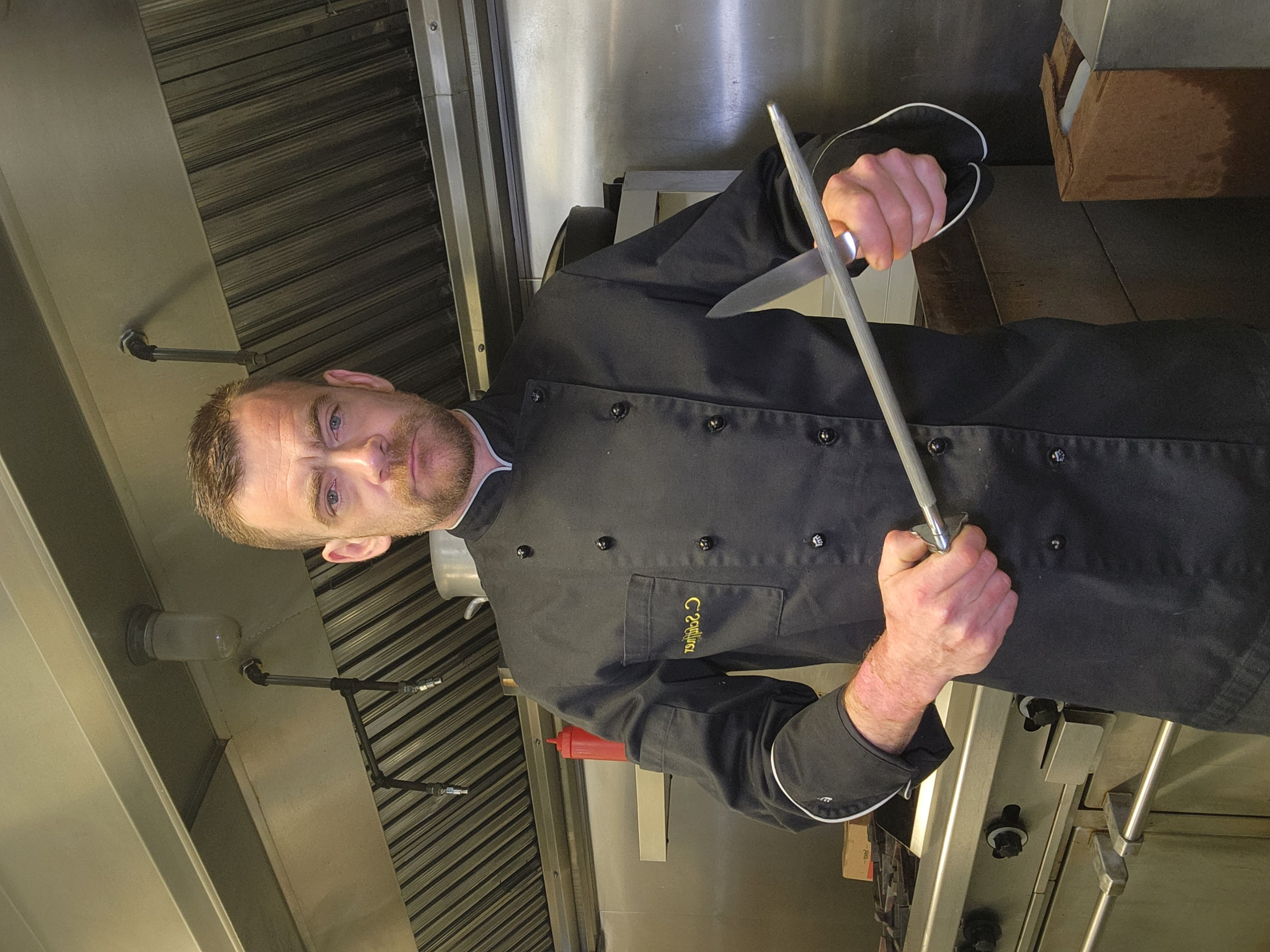
I run a restaurant in Dawson City, Yukon. Population 1,300. We're seasonal — open roughly May through September, with the Gold Rush tourism crowd. In winter, the town practically shuts down.
No chain would ever open here. The math doesn't work for them. They need year-round revenue to justify their overhead — corporate fees, marketing allocations, standardized supply chains from approved distributors who won't ship to a town accessible only by a two-lane highway through the wilderness.
But I'm not a chain. So I built different systems.
I designed everything for 60% capacity during our 5-month season. I source locally when I can — Yukon-grown produce in summer, wild game from local suppliers. My menu changes weekly based on what's available and what's moving. My staff knows the regulars by name, and in a town this small, every customer is a potential regular.
Year one, I found $41,000 in waste I didn't know about. Not because I was careless — because I was running on autopilot without systems. Over-prepping for tourist buses that didn't show. Ordering proteins based on hope instead of data. Staffing for Saturday when it was Wednesday.
Once I installed daily tracking and the 60% rule, my food cost dropped from 38% to 31%. Labor went from 34% to 28%. That's a 13-point improvement on prime cost — roughly $5,400/month in a seasonal restaurant that only operates five months a year. That turned a restaurant that was losing money into one that funds my entire year.
A chain could never do what I did. They couldn't adapt that fast, source that flexibly, or build those personal relationships in a town of 1,300. My "disadvantage" — being small, independent, remote — turned out to be the whole strategy.
How the 60% Capacity Rule Fixes This
The 72-Hour Profit Discovery Calculator is built on this principle. It walks you through nine categories of potential profit leaks and shows you where your systems are designed for full capacity instead of your actual operating reality.
Most operators who run through it find $2,000-$8,000/month in leaks they didn't know about. Not because they're bad operators. Because nobody ever told them to design for 60% instead of 100%.
The calculator takes 5 minutes. No software to buy. No consultant to hire. Just honest answers about how your restaurant actually runs — not how you wish it ran.
Chains design for averages across hundreds of locations. You design for survival at your location. That's not a weakness. That's the strategy. If you want help building those systems, see how restaurant profit recovery works.
Frequently Asked Questions
Can independent restaurants be as profitable as chains?
Yes. Independent restaurants can match or beat chain profitability by using their speed advantage and designing systems for 60% capacity. Chains average 6-9% net profit margins. Independent operators who track daily, adapt menus weekly, and build local relationships regularly hit 10-15% net margins. You won't beat them on purchasing power. You beat them on speed, flexibility, and personal connection.
What is the 60% Capacity Rule?
The 60% Capacity Rule means designing your restaurant's systems, staffing, and menu to be profitable when you're operating at 60% of maximum capacity. Most restaurants are only full on Friday and Saturday nights. The rest of the week, you're at 40-70% capacity. If your systems only work when you're slammed, you're losing money most days. Build for the Tuesday lunch crowd, not the Saturday dinner rush.
How do small restaurants compete on food cost?
Small restaurants compete on food cost not by matching chain purchasing power but by reducing waste, adapting menus in real time, and building direct supplier relationships. A chain pays less per pound of chicken but wastes more because their menu is locked. You can change your special tonight based on what's freshest. That flexibility is worth 3-5% on food cost when you use it consistently.